
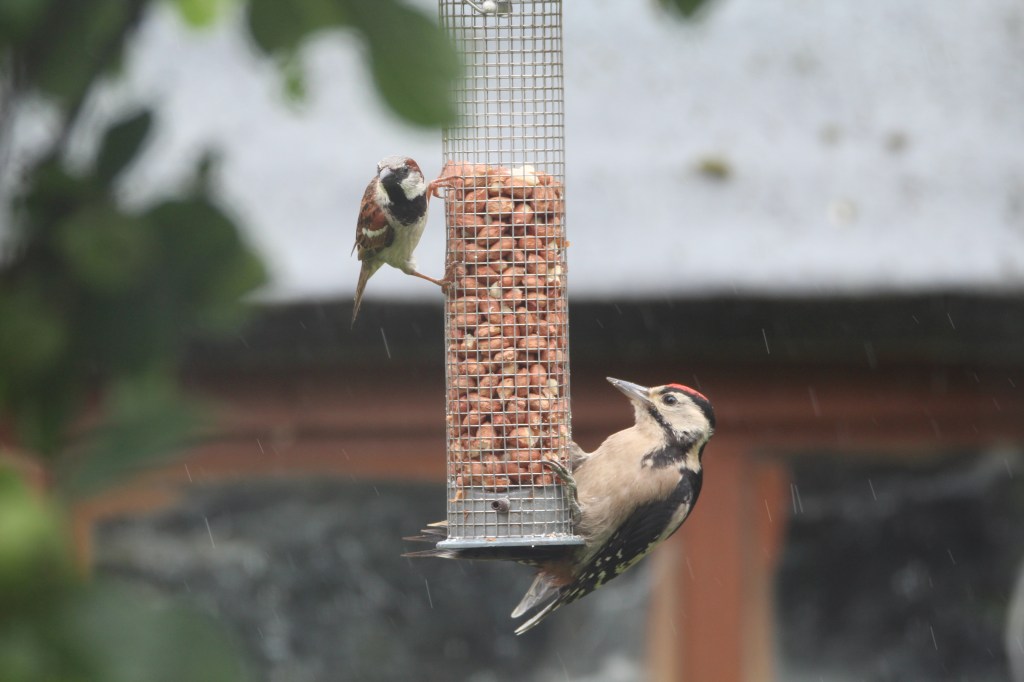
A month or so ago I was going up to the woodpeckers’ hole and watching young woody poking his head out and squealing for food. Now I have the pleasure of watching him feed from the nuts hanging in my garden. Sometimes its the dad that comes but I know this is one of the youngsters from the red patch on the top of its head. He’s sometimes having to share with this plucky house sparrow, although he’s learning to peck at rivals that get too close too.
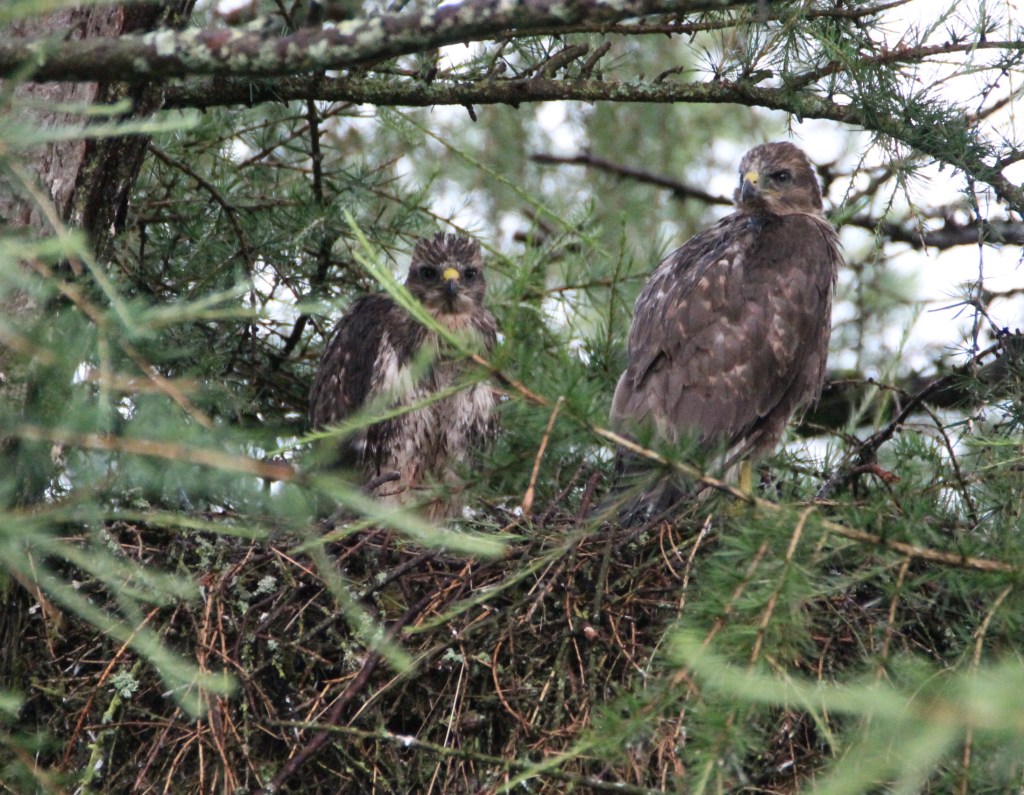
Buddy and Holly are still not yet ready to take to the skies. They are getting very big now. Their parents take turns to hunt and keep watch from nearby trees.
I was fortunate enough to see the kestrel family the other day. One was right in front of me on a path but flew off straight away. Another youngster was sitting on a wall next to the nest tree. I got some photos approaching it from behind.
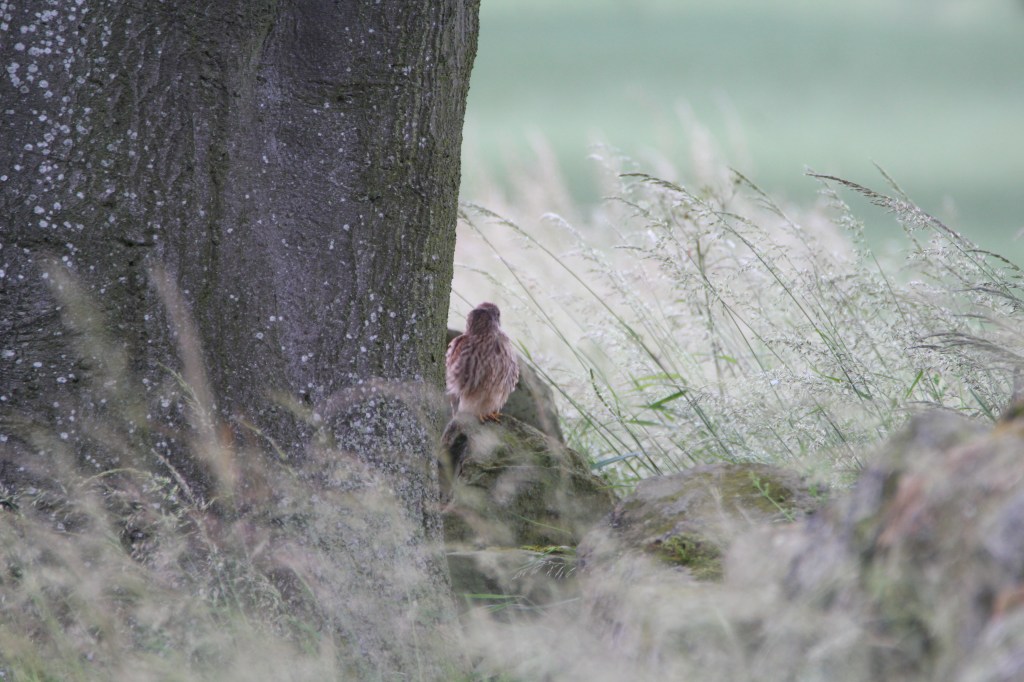
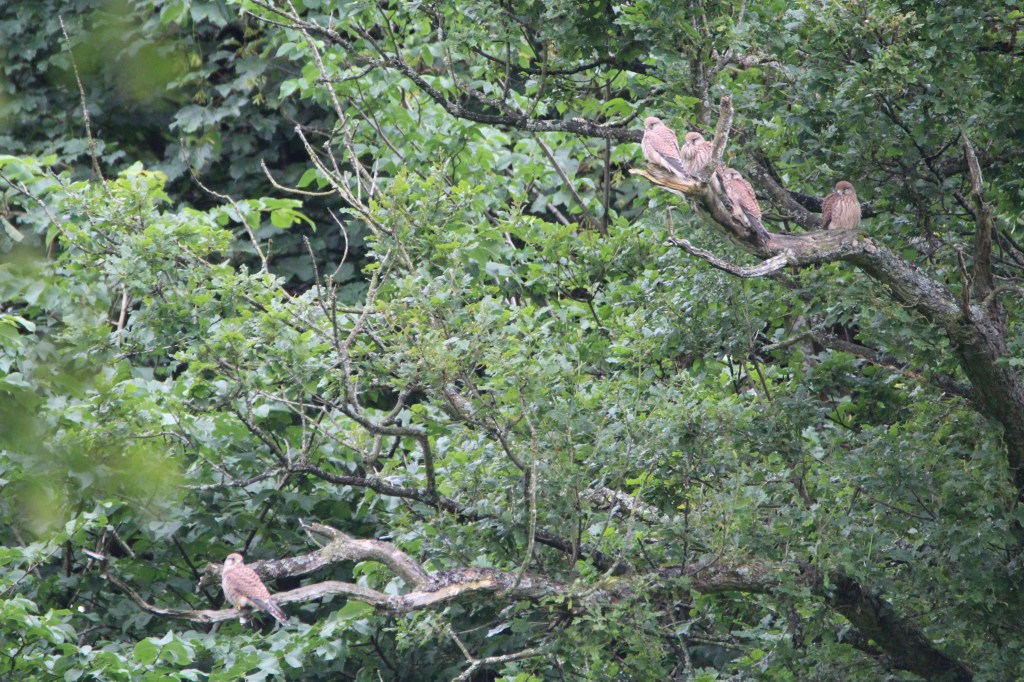
When I crept past the tree I was eye to eye with it, so close but not fast enough with pressing the shutter to get a super close up shot. However it flew into a nearby tree and I was lucky enough to see the whole kestrel family perched in branches there. Five kestrels in one go …not bad!
I’m wondering if this birdie on a post is a young meadow pipit.

This next photo of a young pheasant was taken very hurriedly from the car passenger seat after we spotted a pheasant and her brood at the side of the road. Its camouflage is so good I wondered if there was another out of focus behind it to the left, but I think it’s just dry grasses.

Here is a young pied wagtail. At first I thought I was seeing an unfamiliar bird species but then I realised the juveniles often look quite different from their adult versions.

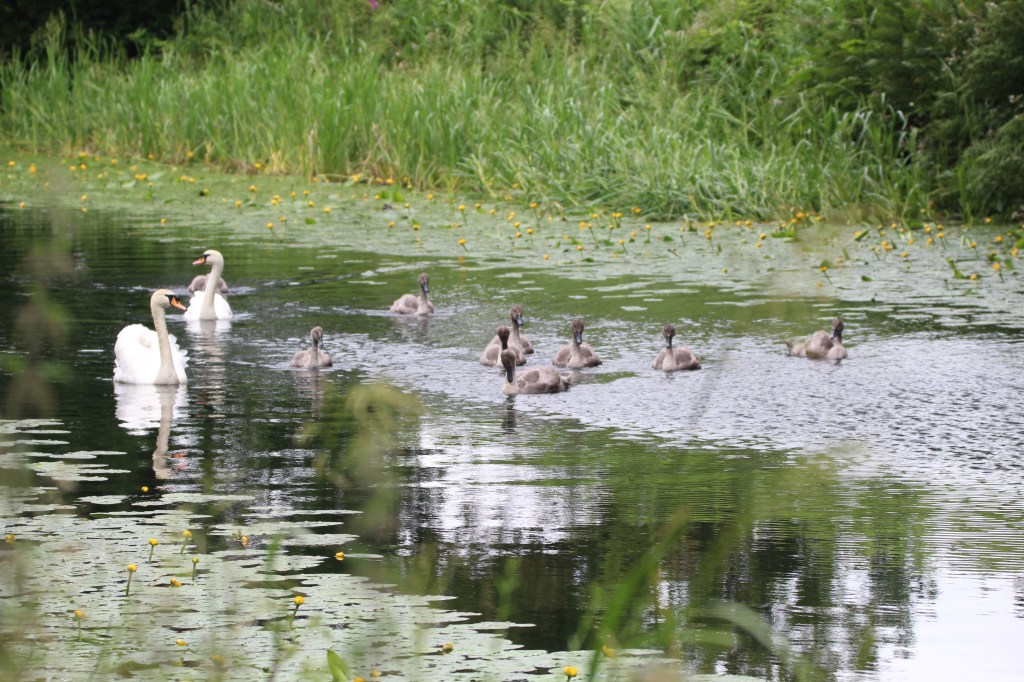
Lastly an update on the cygnet families. There is a family of nine cygnets down by the canal. At the moment they are quite the “ugly ducklings”. They look to be thriving.

Unfortunately the cygnets on the Alloch Dam are in the last week down from six to four. I wondered what might be predating them now they are bigger. It could still be a fox, or even a buzzard with a growing family to feed? Another possibility is that they are being killed by an adult male swan or cob. It is not uncommon for cobs from another family to kill a rival’s youngster. Indeed the adult swans “play” drowning their cygnets to make them stronger and prepare them for attacks from outsiders. parents might also kill a cygnet if it has some weakness or disability. Last night we met a dog walker who said the cob was a killer parent. He had met a distressed woman last year who had just witnessed the cob killing its cygnet. I had heard this story before. Last year there were two cygnets on the pond and none survived. There are now four left this year. Here’s hoping it stays that way.
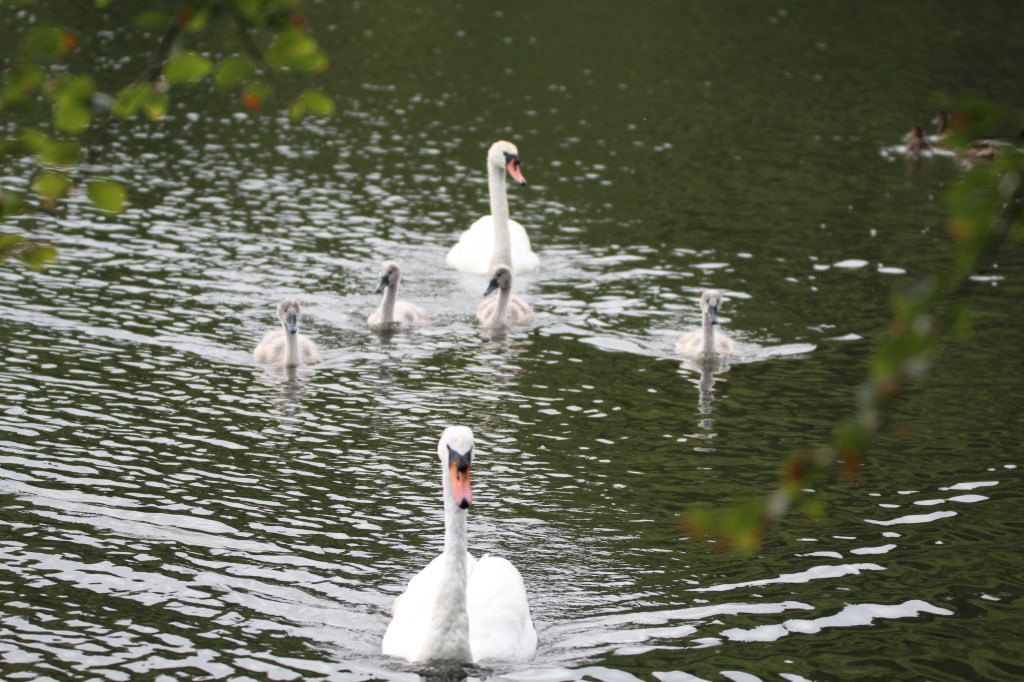
Be careful young un …watch your back!
 Sarah's Wildlife Watch