It has been a long time since I have taken any kingfisher photographs, mostly because I haven’t seen any, or if I have I’ve not had my camera with me. I met another wildlife photographer at the weekend who tipped me off about where I might see a pair and this led to most of the photographs below.
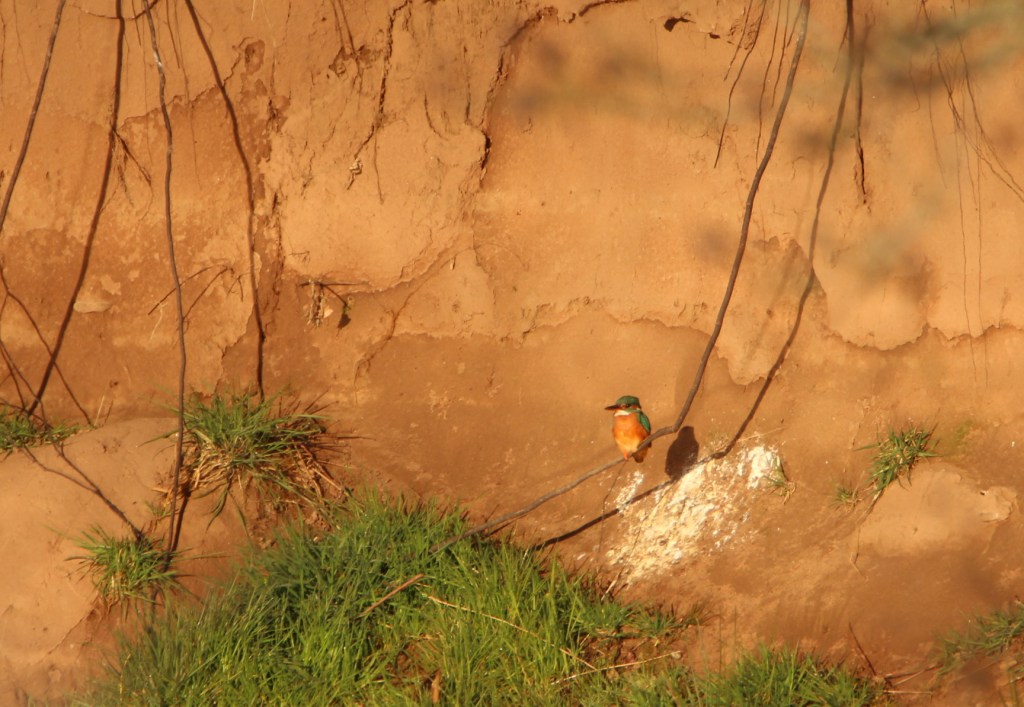
Here is one perched close to where it has a nest hole, a metre long burrow at the top of this sand bank. This was very early in the morning, the low sun illuminating the bank. I was way over the other side of the river and took this shot from afar. Kingfishers are classed as “schedule 1” birds which makes it a criminal offence to disturb them when they are nesting. I learned this when I was asked to stay well back from the bank, possibly by a countryside warden. I guess he was keeping an eye on the royal couple and not wanting them bothered by visiting paparazzi.
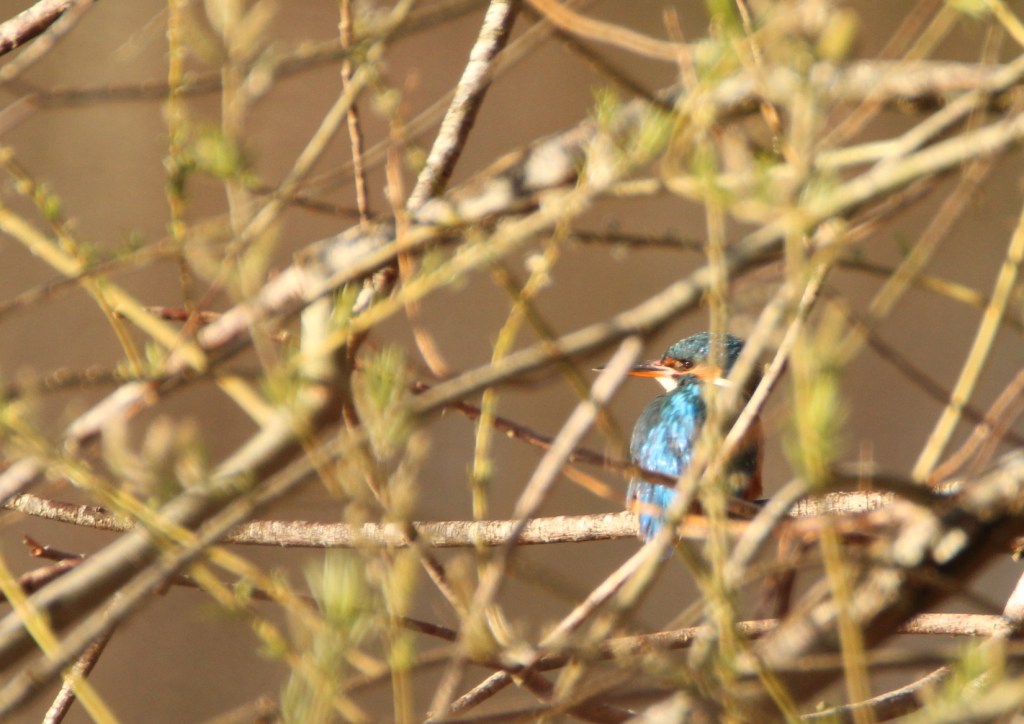
So I did not go any closer to the bank, tempting as it would have been. However I saw this female kingfisher in this budding willow tree on the other side of a burn. How do I know it’s the female? Well you can identify female kingfishers by them appearing to have orange lipstick on the bottom of their beaks!
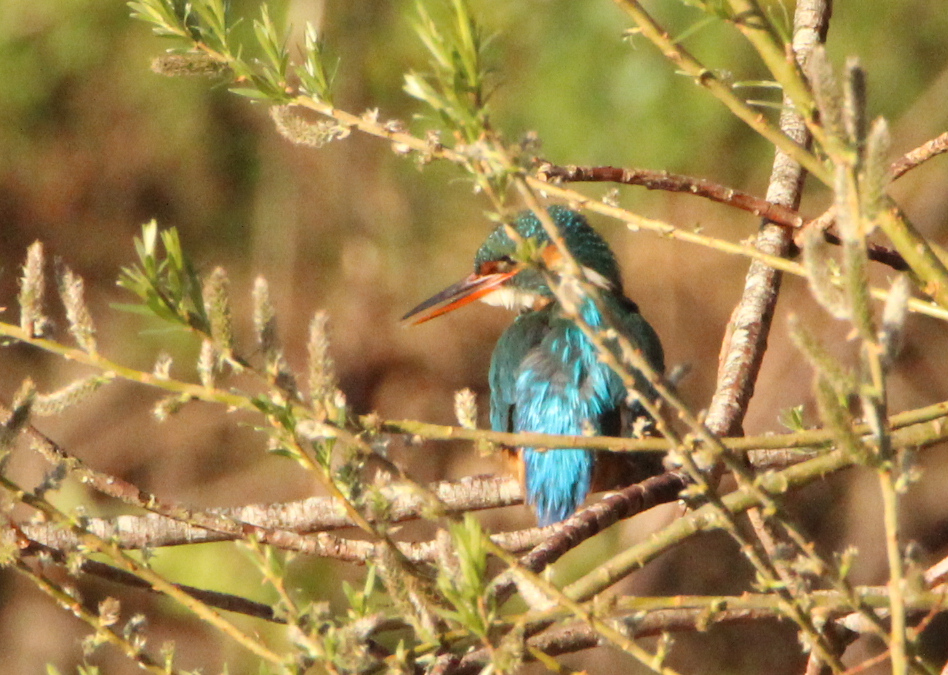
This girl was having a good preen, perhaps drying out after a dip in the river or perhaps as she waited for her mate to come and woo her with a fish.
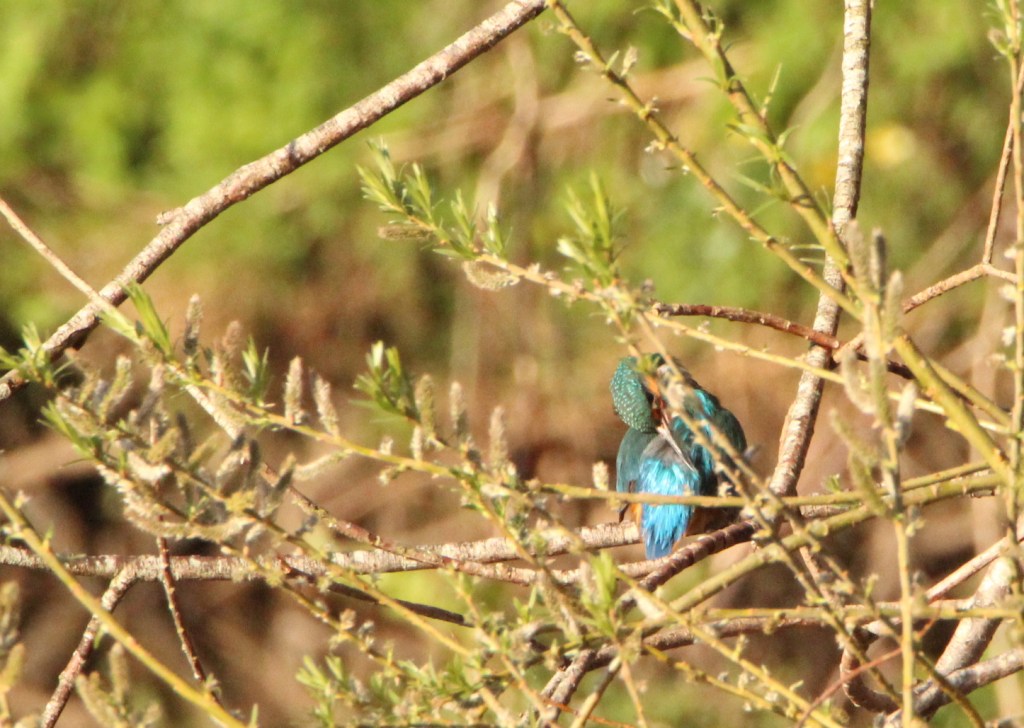
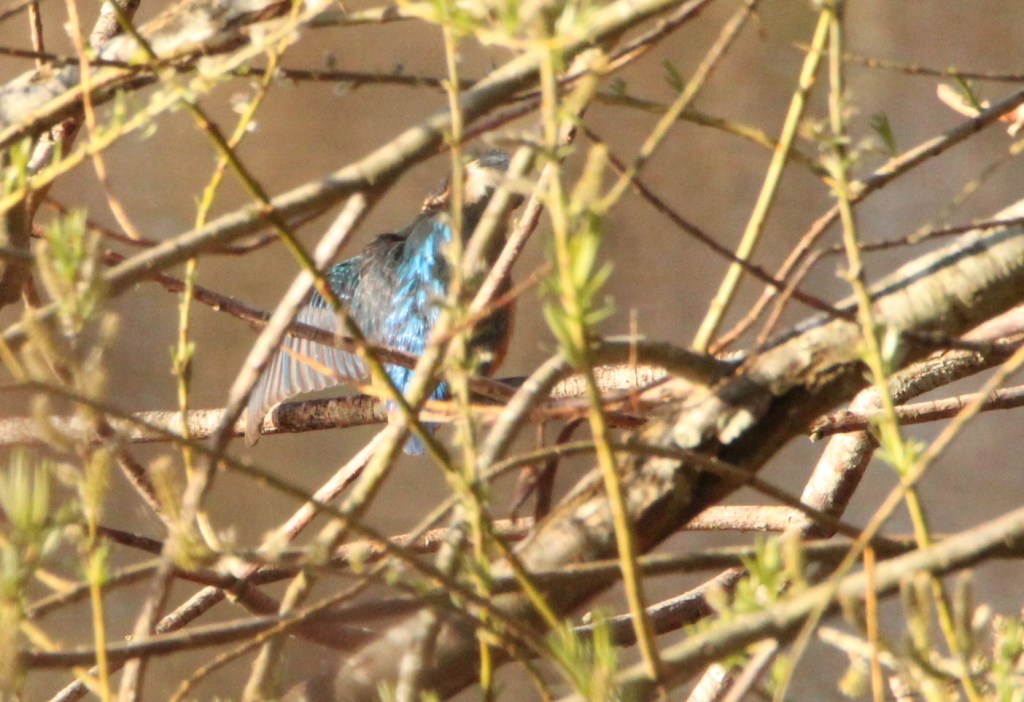
This kingfisher was photographed in a shady spot. It’s difficult to see if it’s a he or a she.
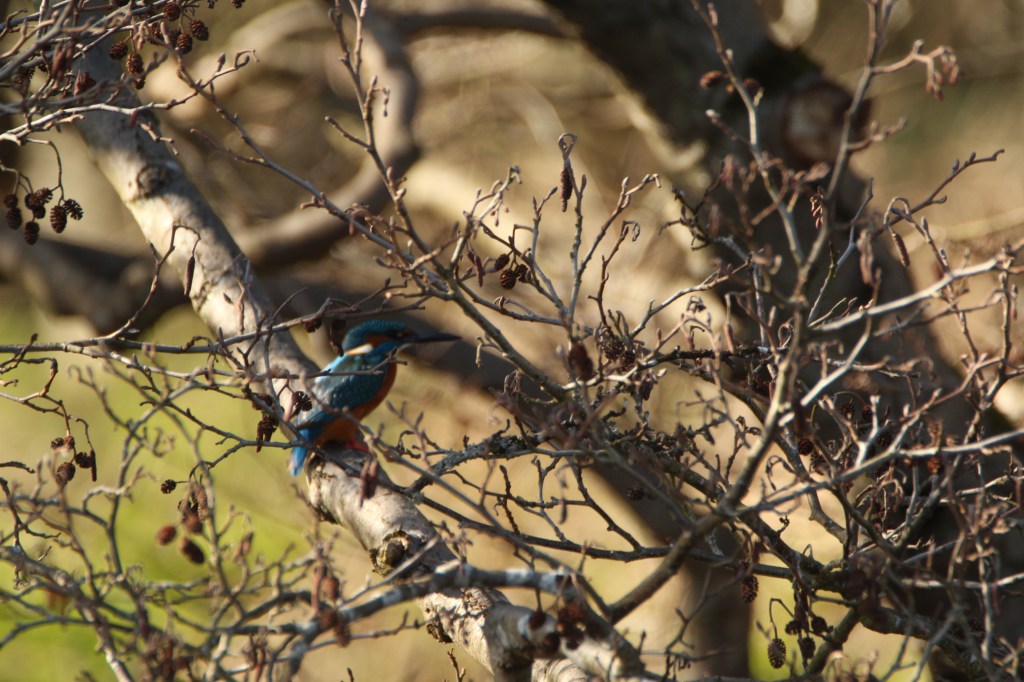
This one is definitely the male, having only a black beak, no orange lipstick on !!
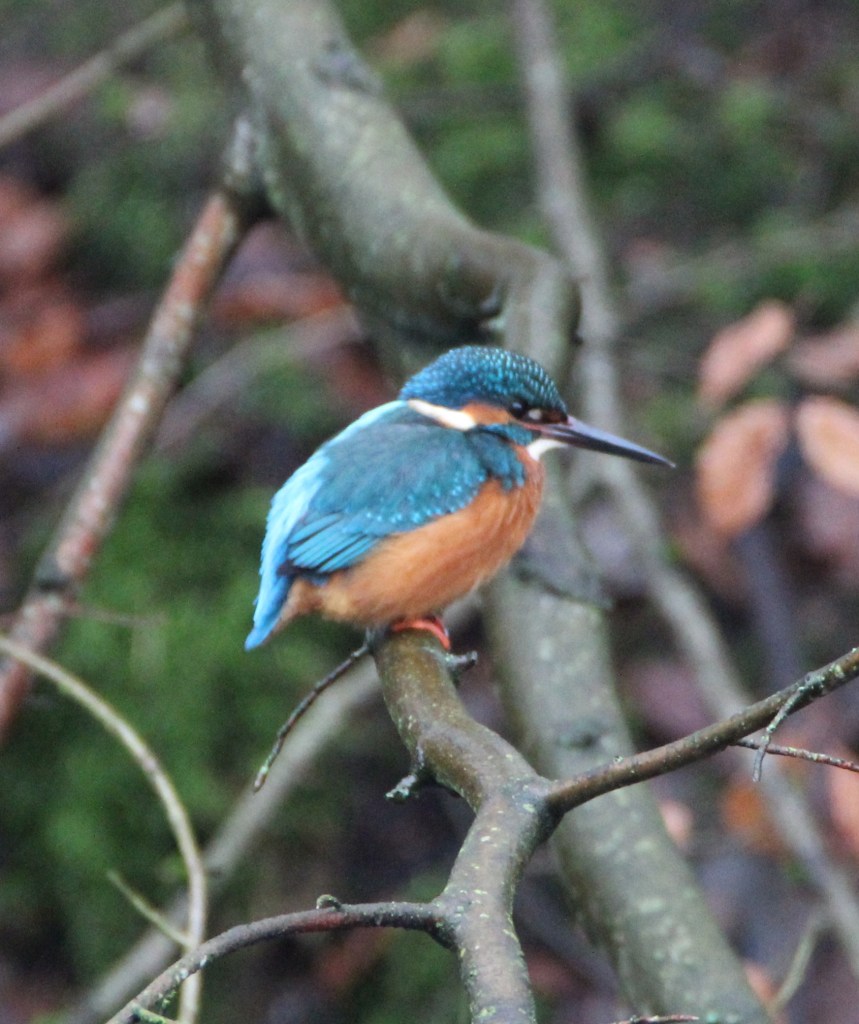
The surprising thing about kingfishers is their size. They are a lot smaller than you might expect, being just bigger than a sparrow. They are dressed in royal finery however, spectacular turquoise blue on top of darker blue which shimmers in sunlight and flashes like a neon streak when flying past you. Often it is the bright blue which catches your eye, although I also look out for an orange autumnal leaf shape amongst green foliage. Sometimes if you hear a high pitched “Keeee” whistle on a river or canal that can alert you to a kingfisher signalling its presence.
 Sarah's Wildlife Watch