
Well, today was cold, windy and rainy so I thought it might be worth seeing if the barn owl was sheltering in its tree hollow. It wasn’t, and I had a very wet, soggy tramp around the loch and back to the car. But just as I was about to turn my back on the grey, choppy loch waters I spotted the osprey! Ironic, as I’ve sat for hours on beautiful sunny days to try and spot then photograph one, but with no sightings at all.
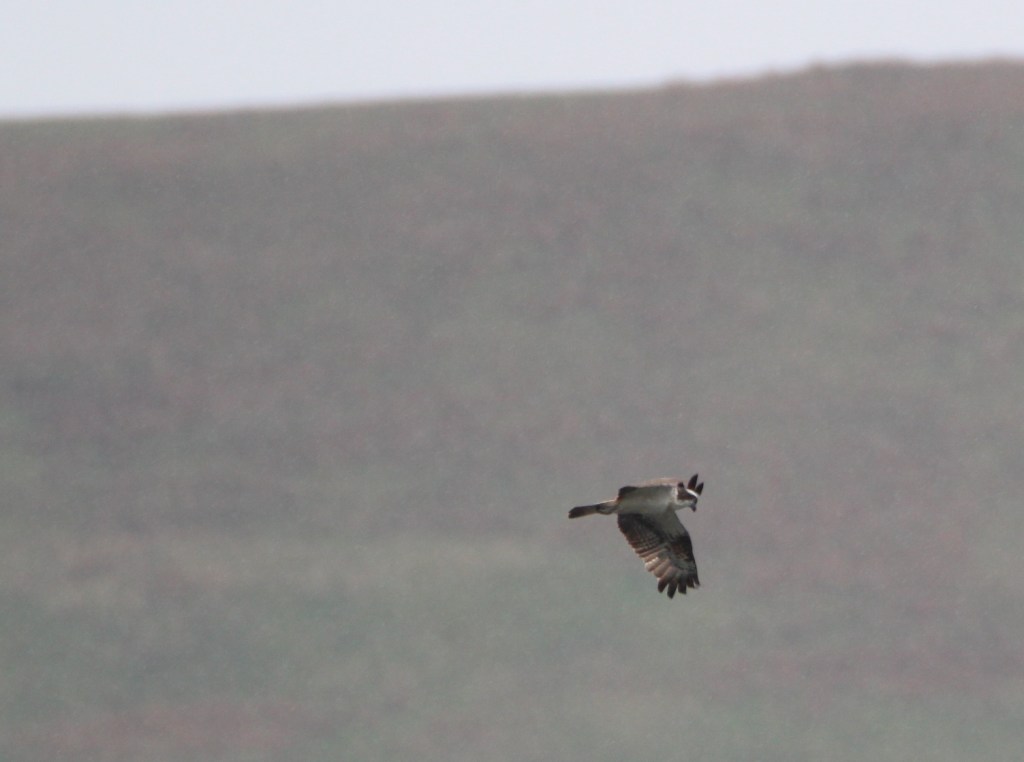
Today’s osprey circled the loch many times, watching with its exceptional eyesight from high up. Several times it looked like it was about to go into a downward dive but it aborted each time. I waited and watched, despite being in pouring rain. Then it hovered still for a second and took a downward dive. So, so fast! I read that ospreys can dive at about 77mph. So not a surprise that I couldn’t catch the moment of impact on the water but here is a photo of it half submerged.
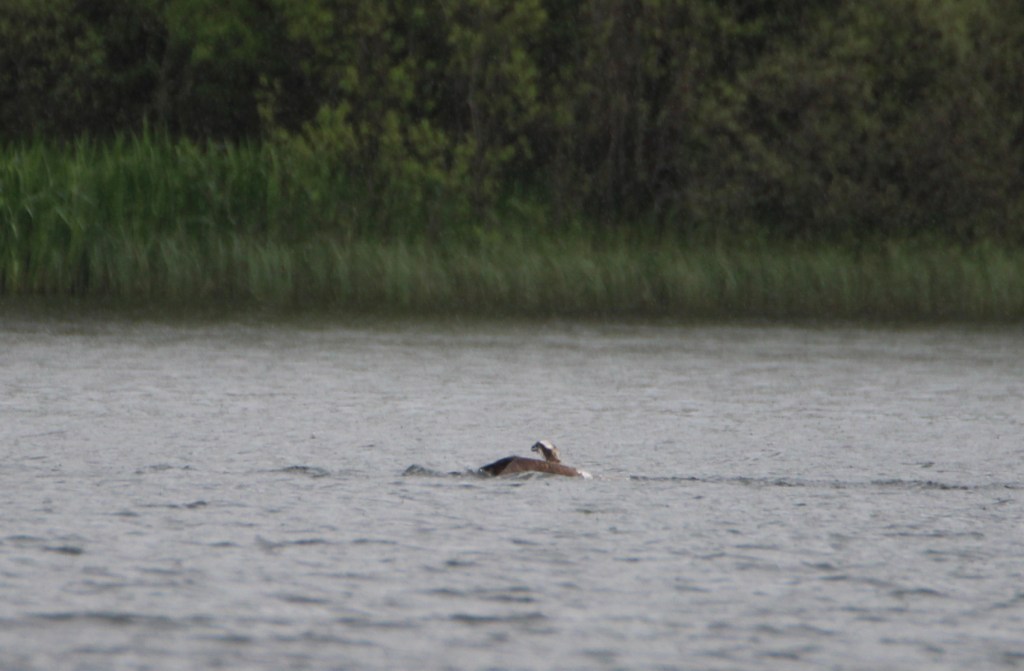
Ospreys like some other diving birds have a third eyelid called a nictitating membrane which is semi transparent. This in effect gives ospreys goggles to protect their eyes when diving whilst still allowing them to clearly see their prey.
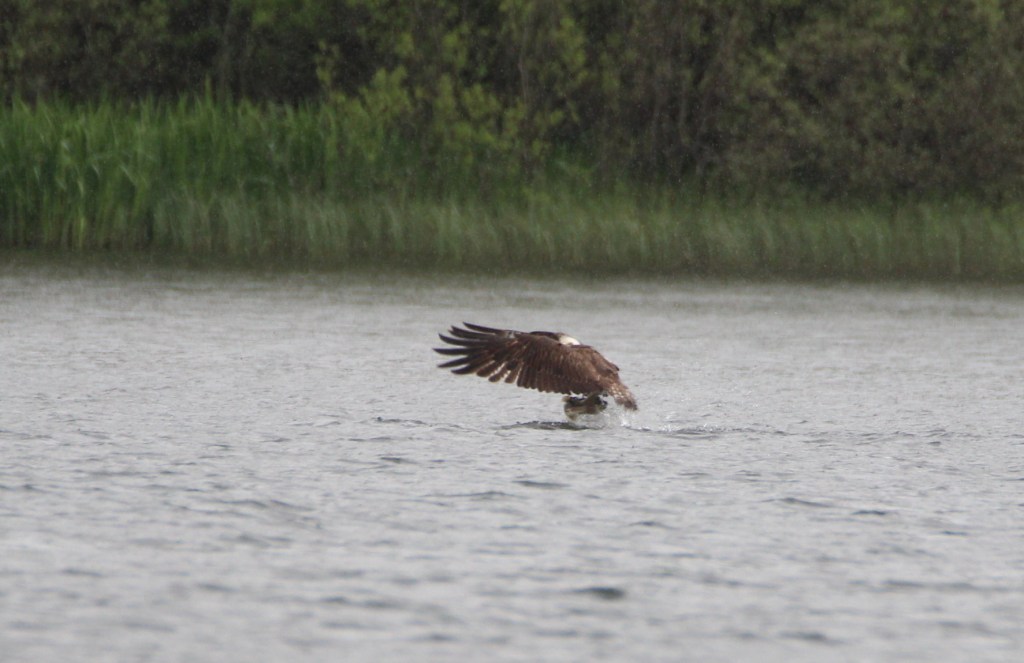
It’s often quite a struggle to get back out of the water carrying a big fish in its talons.
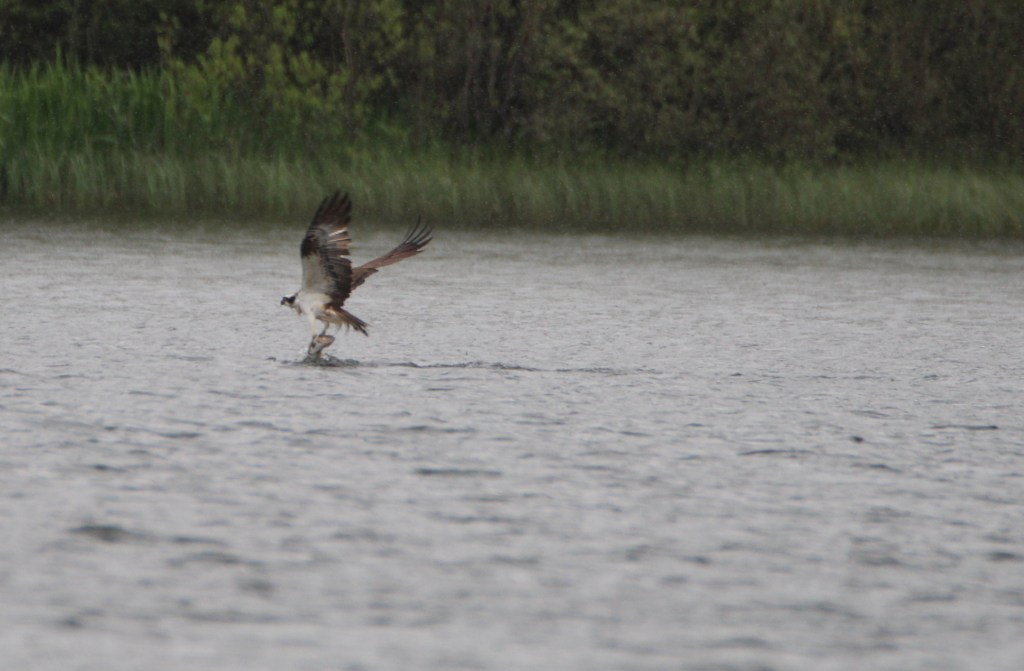

At first the osprey can only just about manage to fly close to the water, skimming the fish as it goes.
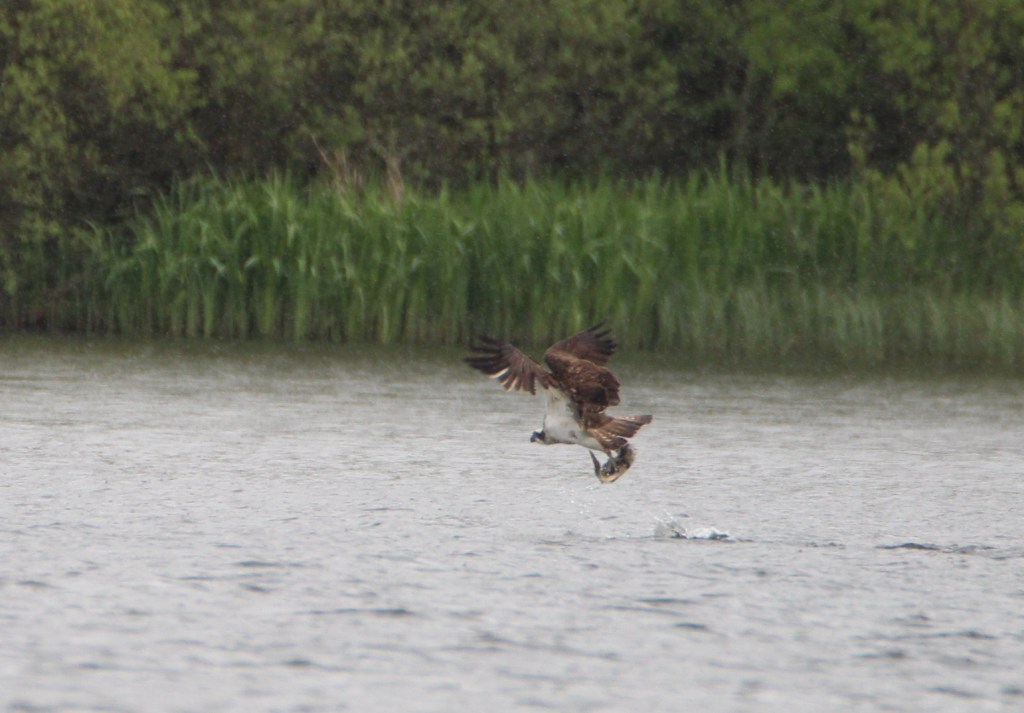

The fish looks still to be writhing about in the minutes after it is caught.

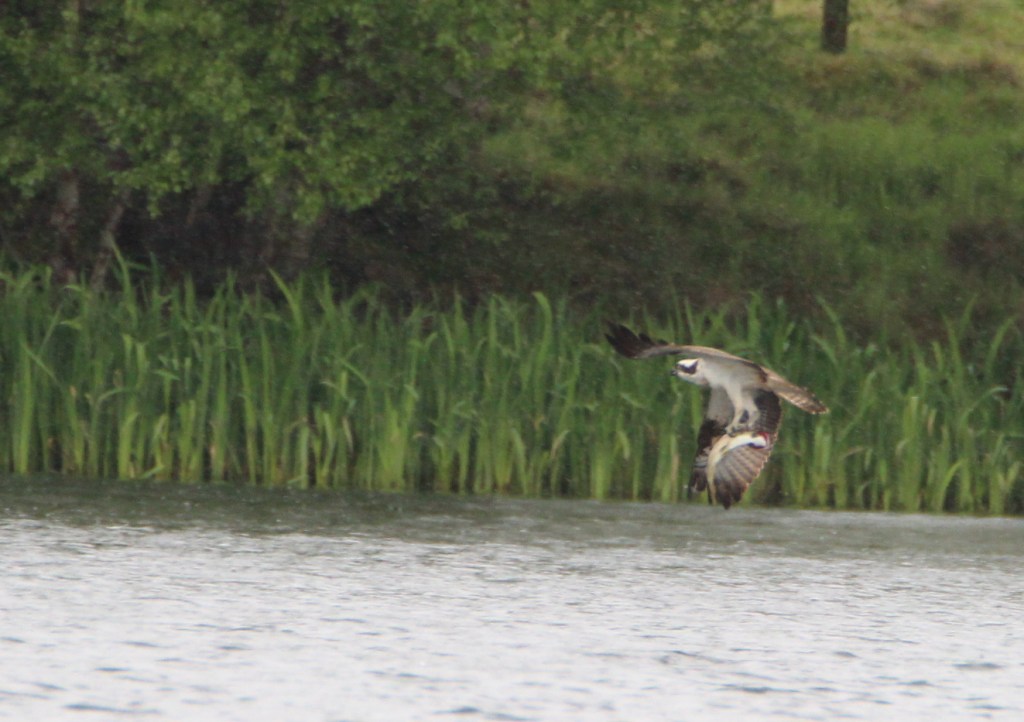
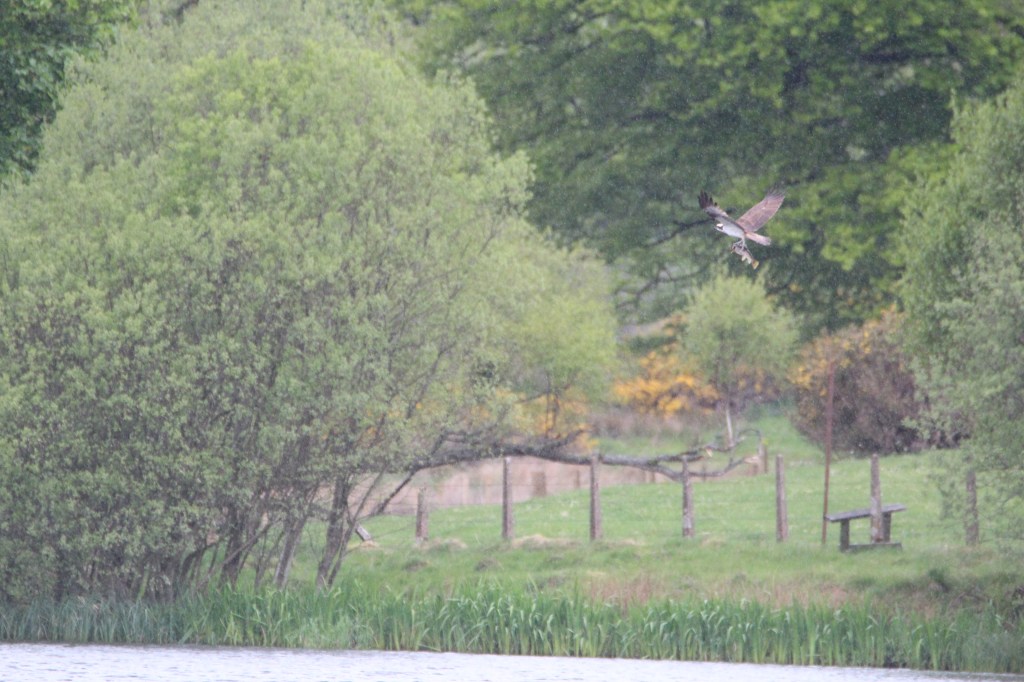
The osprey takes off into the wind and gradually it is able to gain a bit more height.
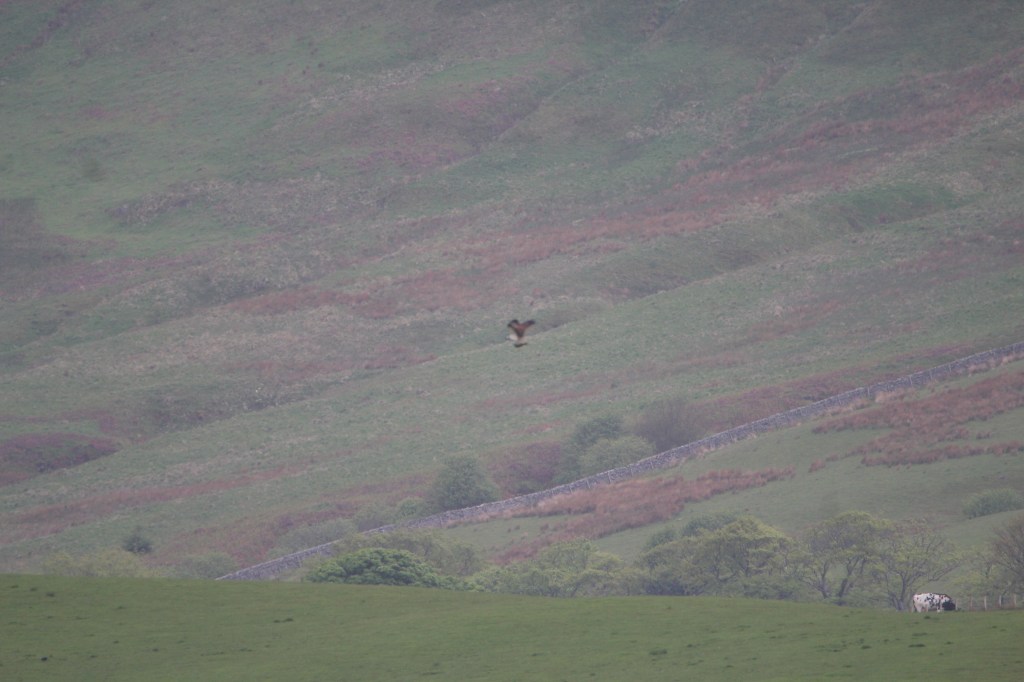
Finally it flies higher and higher until it becomes a speck against the hillside. It will take its catch up and over the hills to its nest in the valley beyond.
 Sarah's Wildlife Watch