I walked down the main path in Mugdock Wood yesterday which was busy and noisy with people and dogs. I could hear jays squawking and a woodpecker chooking but thought they would not be coming anywhere near this main path. So I walked off some rough, less trodden paths to the sides.
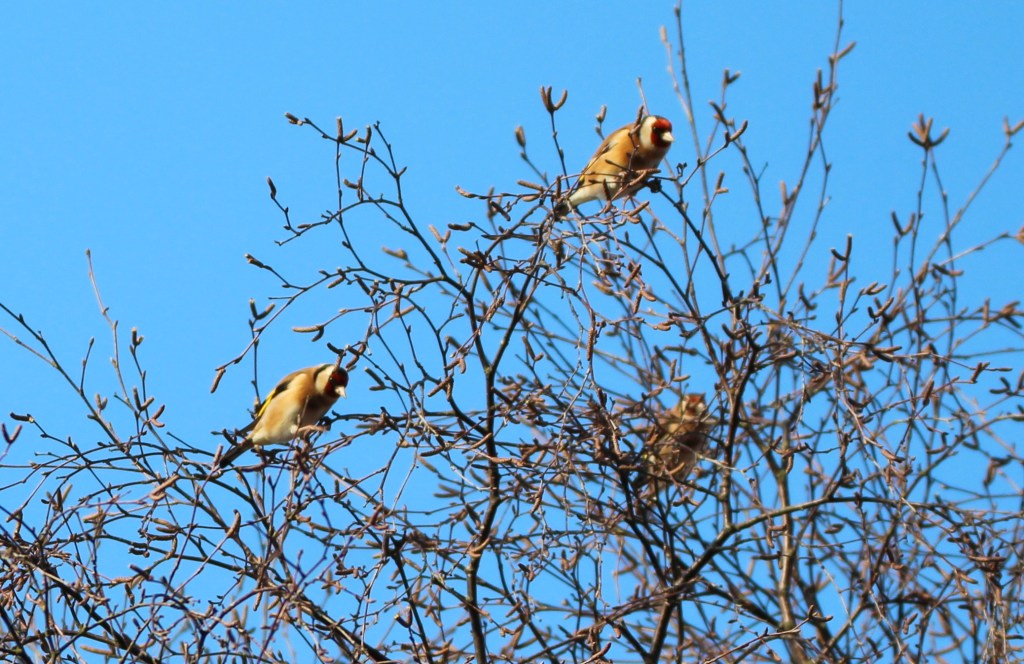
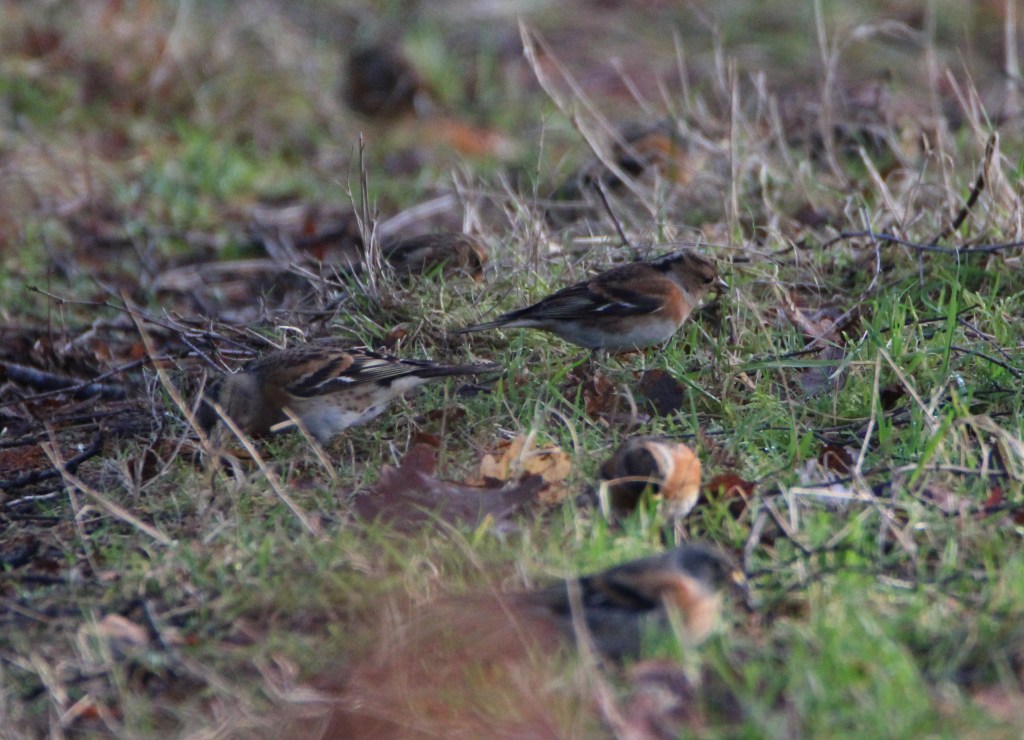
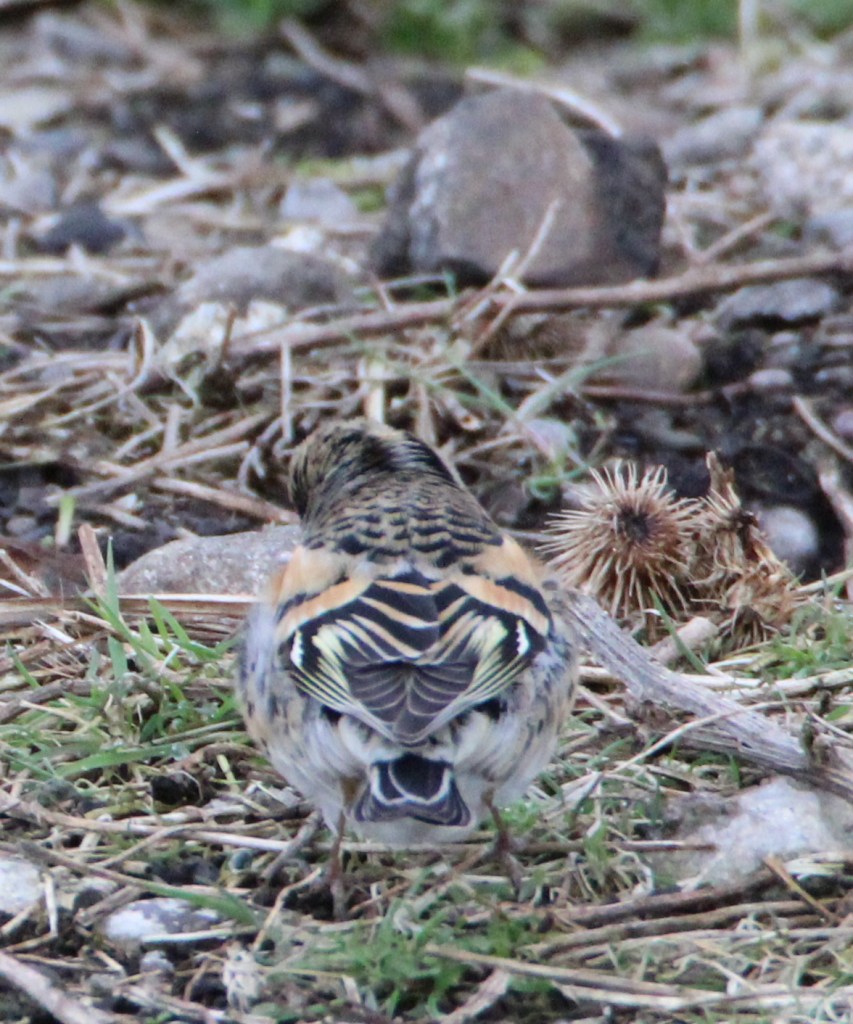
At first I felt a bit dispirited as the woodland seemed to be quite empty, only the occasional distant tweet way up in a tree. But then I heard the musical notes of goldfinches and I followed along to where I heard them. Then I saw some flocks of birds flitting down from small beech saplings onto the ground. I wondered if they were bramblings or if this was just wishful thinking and I was mistaking chaffinches for them. This is where getting some photos of them helps identify them back home. They were indeed bramblings.

Bramblings are winter visitors escaping the snows of Scandinavia. They are similar to chaffinches but coloured more orange and have grey heads and yellowy beaks. They flock together to forage for beech nuts and other seeds on the ground. When I moved closer to them they suddenly flew up and there seemed to be about 20 or 30 of them. There were other birds in amongst them though, including blue tits, coal tits and great tits. I also thought there were may have been some smaller redpolls amongst them in the trees, but could not get a clear enough photo of one to confirm this.
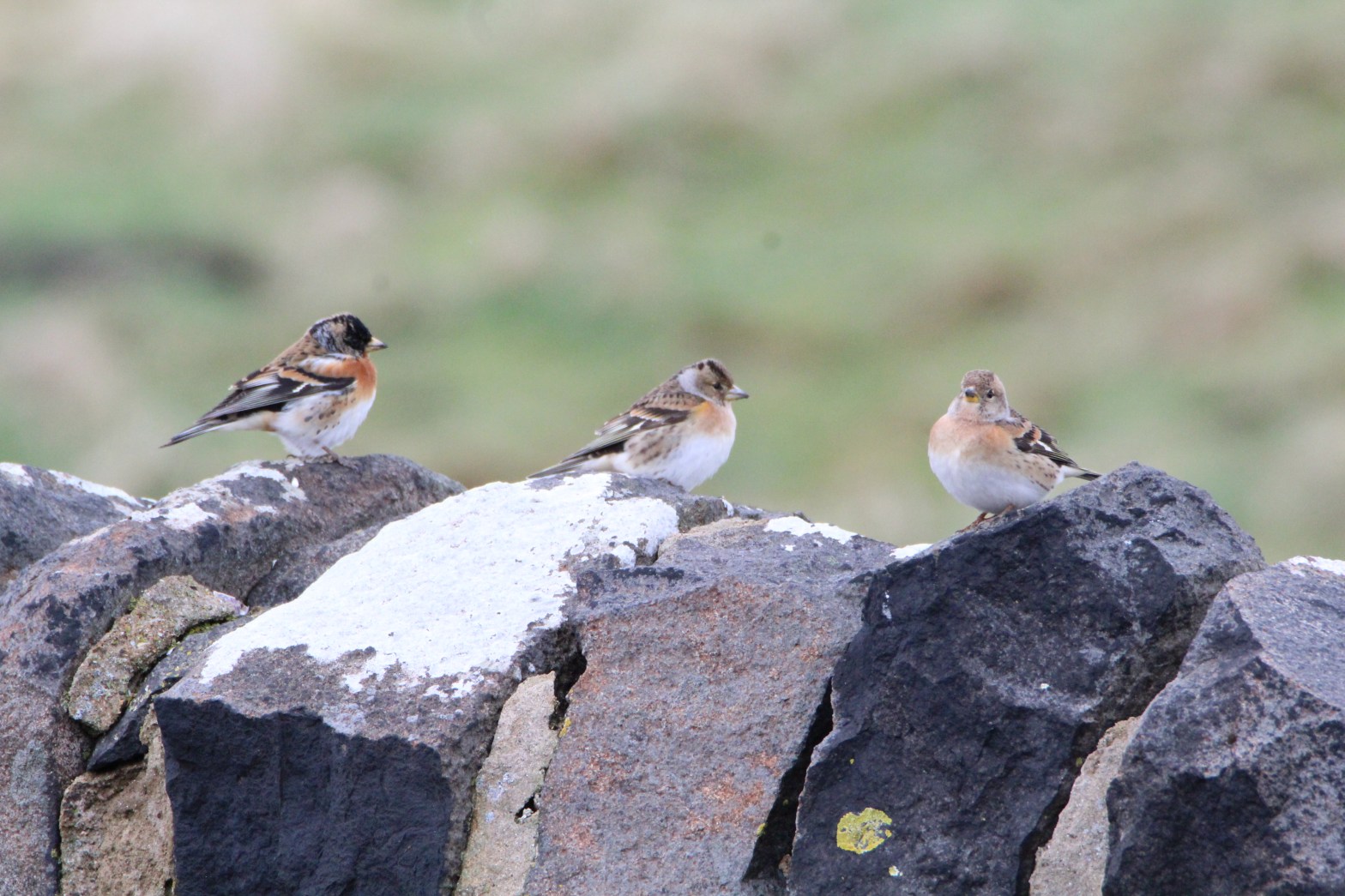
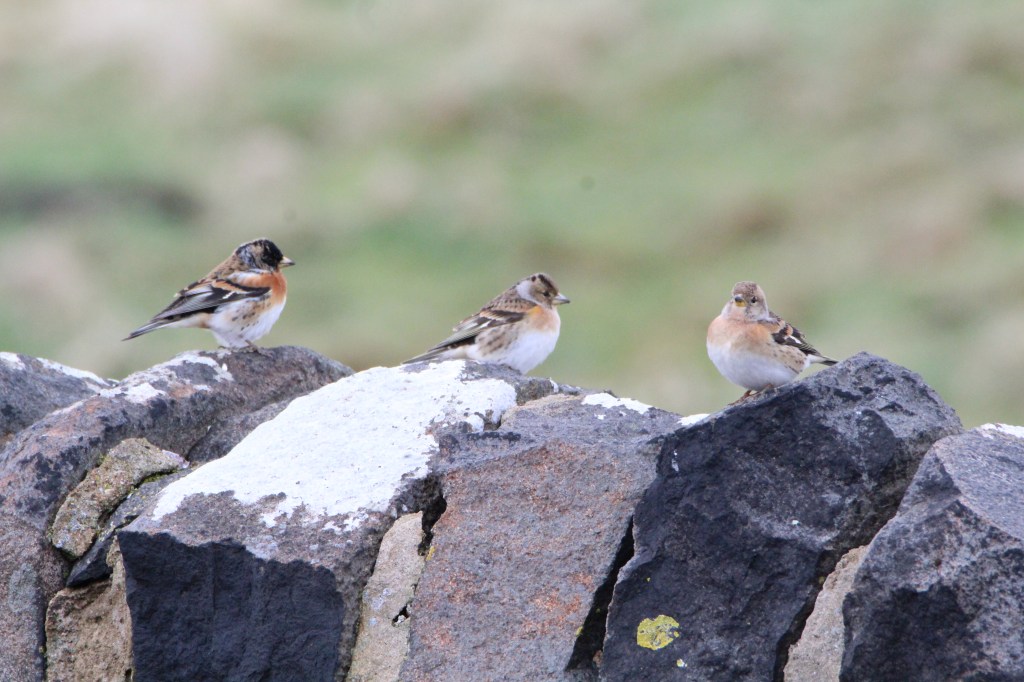
The only other time I have seen bramblings was one spring on the Isle of May. There was a small group of them, perhaps stopping off on their way back to Scandinavia. Here the male was starting to get his summer plumage, where his head turns more black.
I hope to go back to Mugdock Wood again soon, for more exploring off the beaten track. I hope to keep an eye out for redpolls and also see if I can spot these bonny bramblings again.
 Sarah's Wildlife Watch