
I’m just back from a week in Mallorca where the highlight was seeing flamingos in the wild. I’d read that they could be found in the southern part of the island, an hour and a half from where we were staying. But it turned out we didn’t need to drive so far to see them. We were visiting a nearby nature reserve when we spotted a pink bird the size of a swan flying in the distance!
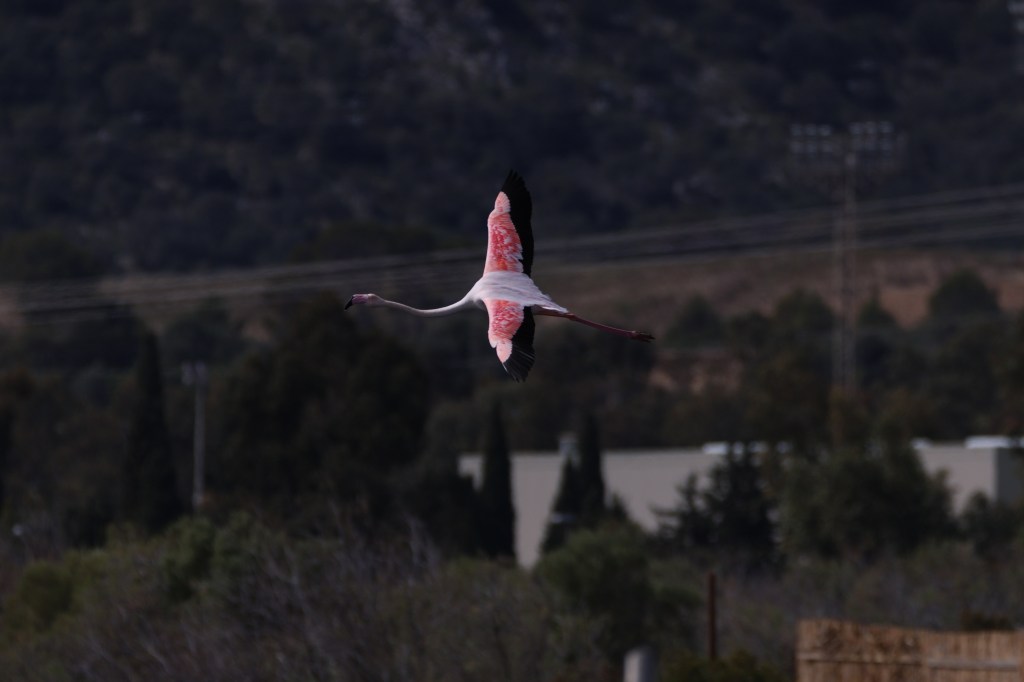
We walked down to where we’d seen it flying towards and lo and behold found a lake with about a hundred flamingos all gathered. This was no “flamingo land” park, these birds were in the wild, having flown up to overwinter in Mallorca from Africa. I had no idea there were flamingos to be found in Europe. In 2022 the European population of “greater flamingos” was estimated to be between 45,000 and 62,000 pairs. Here is one touching down on the lake.

Here is a group of them clustered together. The juveniles did not have much pink on them. The adults had pink beaks and on the underside of their wings, not as pink as I expected but that depends on how much of their diet consists of algae containing carotenoid pigments. Flamingos live in shallow salty or brackish marshes and lagoons. They feed on phytoplankton, small seeds, insect larvae, small fish and small crustaceans and molluscs.

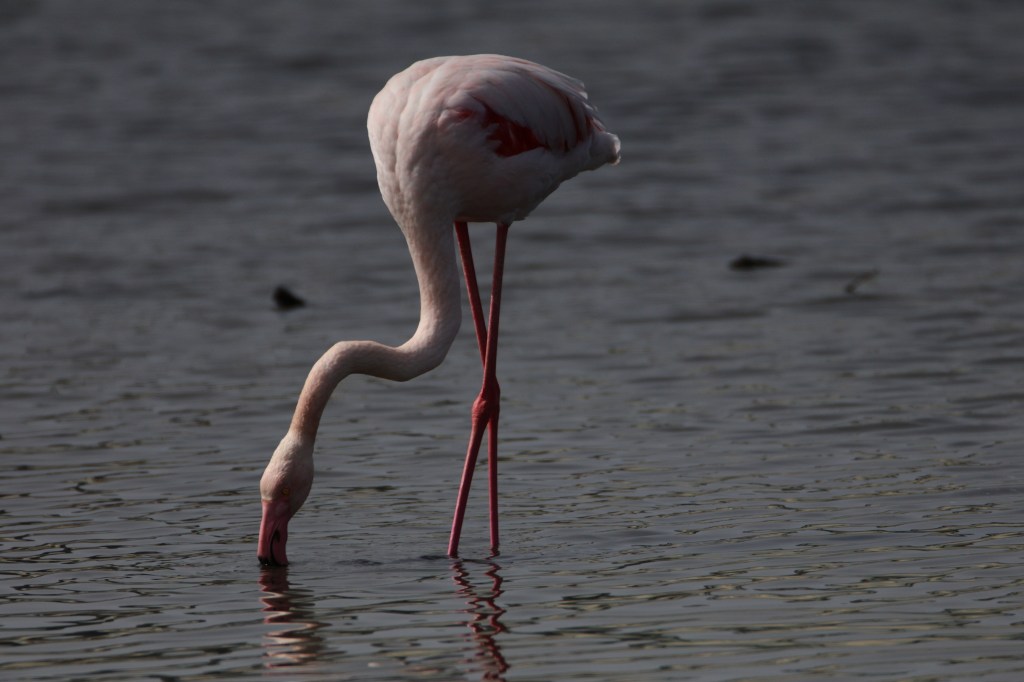
I was just thrilled to see them up close from inside a bird hide. Their legs and necks are even longer than I imagined and they were very graceful.
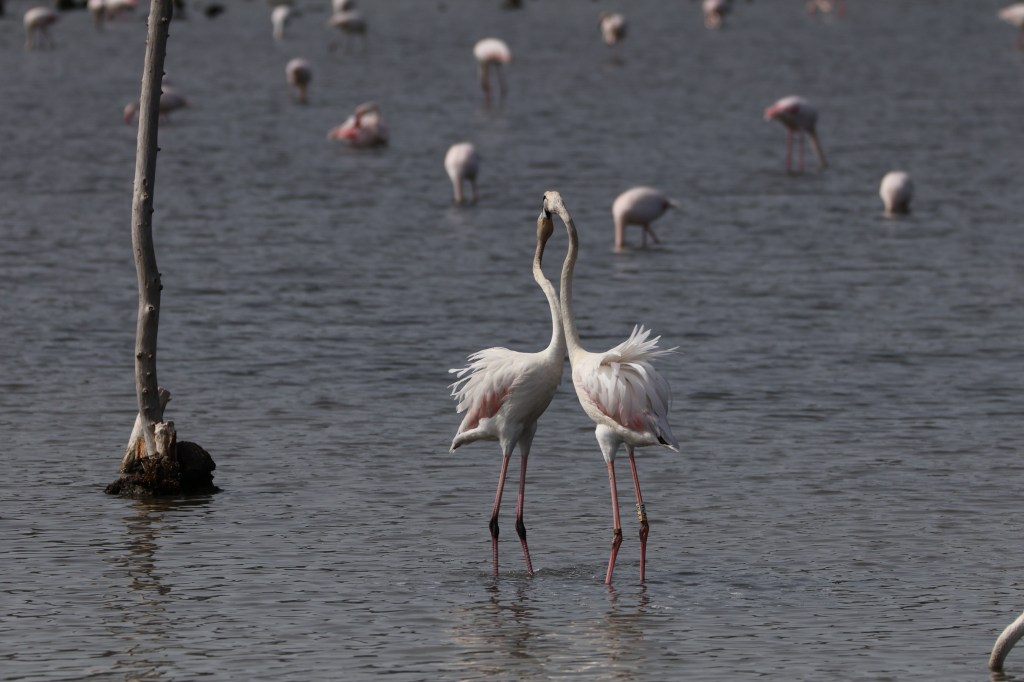
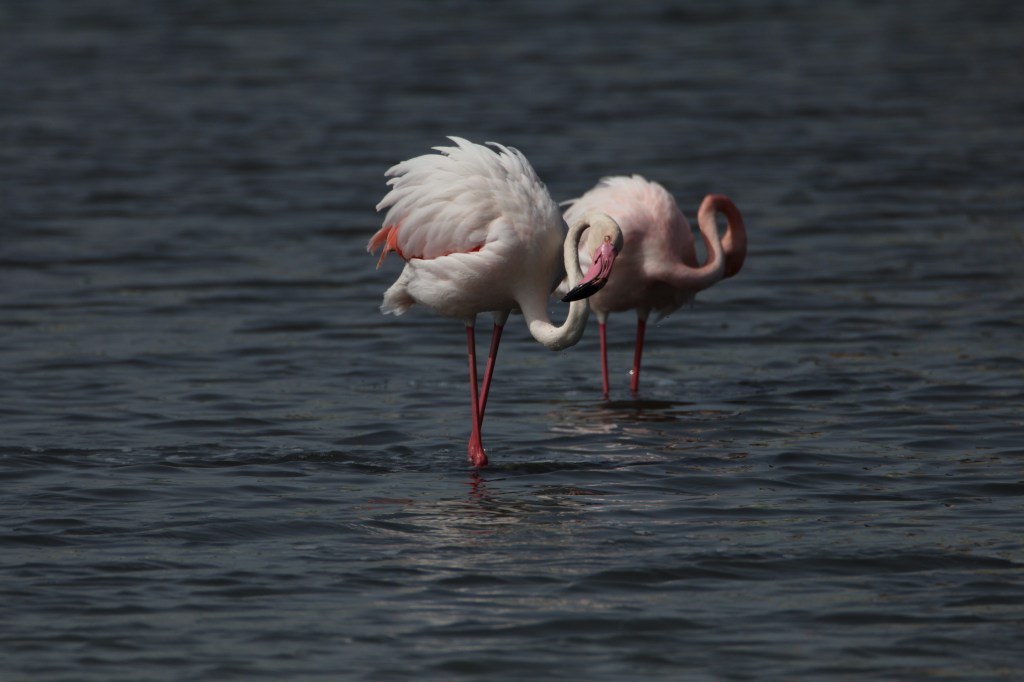
This pair were having a bit of an altercation. They fluffed up their feathers and locked beaks with each other. At one point their necks were twisted around.
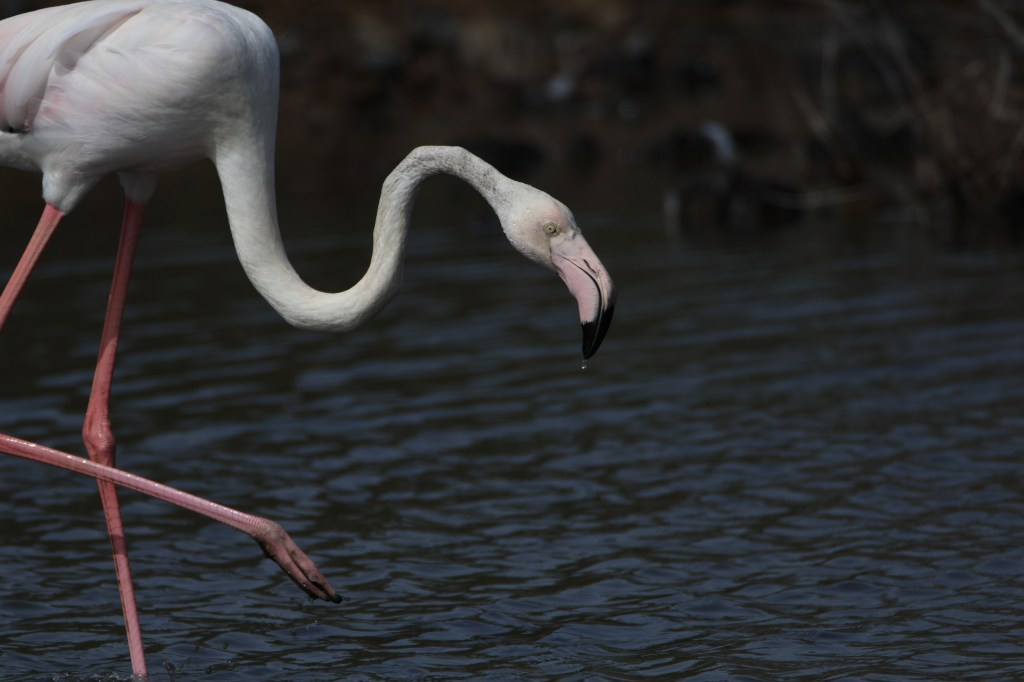
Here is a close up of one, showing its remarkable neck and its large pink and black tipped beak. Its beak acts as a filter, straining their food out of the water.
What an absolute treat to see them! I was speaking to a Mallorcan ornithologist at a bird centre and he told me he had recently visited Scotland and his big thrill was seeing pink footed and Canadian geese! He may have been happy to see swans too, since they too are a rarity in Mallorca.
 Sarah's Wildlife Watch