
Always expect the unexpected. A few weeks ago we took some friends to see if we could catch sight of a barn owl at dusk. When we arrived by the barns we were excited to see an owl on top of a post. At first I thought it was our male barn owl, but then noticed these tufts sticking up.

Obligingly the owl turned round to face me. It was a long eared owl, although these tufts are not actually the ears. They are feathers which get raised when the owl is on high alert.

Actually owls have asymmetric ears, small openings or slits in the sides of their heads, one high up and the other lower down on the opposite side. They have acute hearing at certain frequencies which allows them to hear small prey rustling down in the undergrowth.
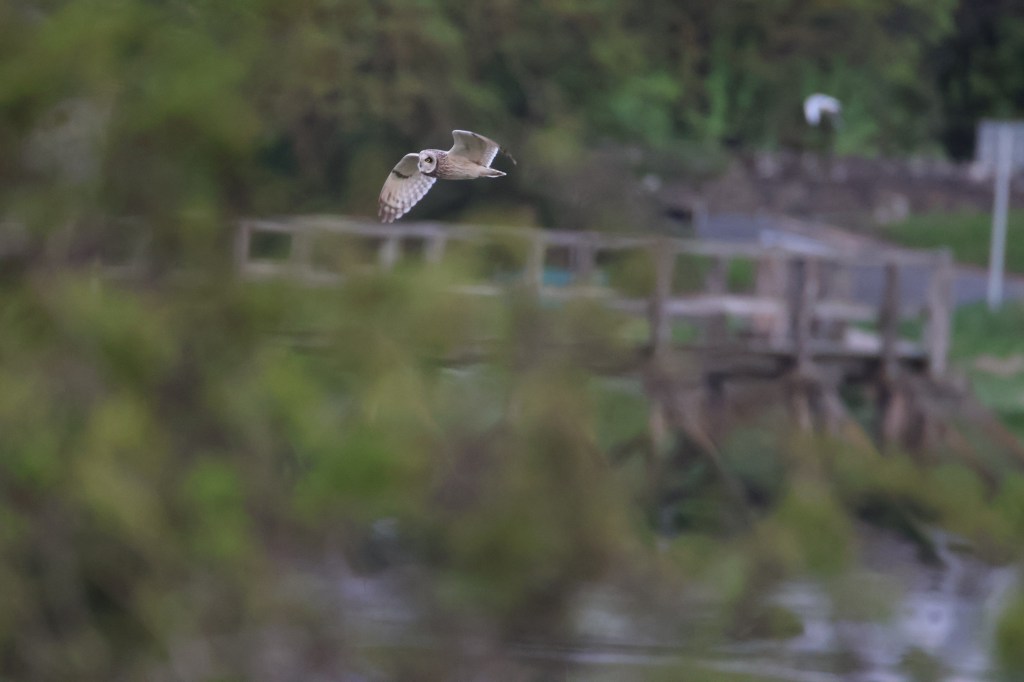
A week later I finally got a good view of one of the short eared owls which have been sighted in the past six months at Aberlady Bay. The last time I was able to get good sightings of these owls was on North Uist a few years ago.
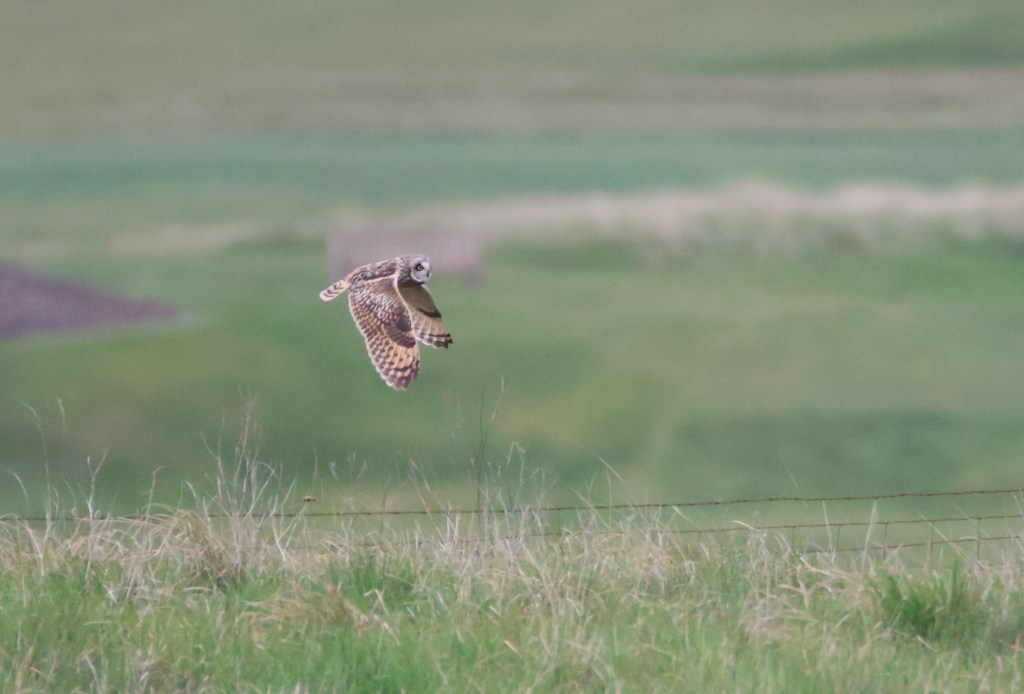
Whereas long eared owls have striking orange eyes the shorties have yellow eyes. Short eared owls will hunt in the daytime, gliding low over fields and rough grasslands then swooping down to catch their prey.
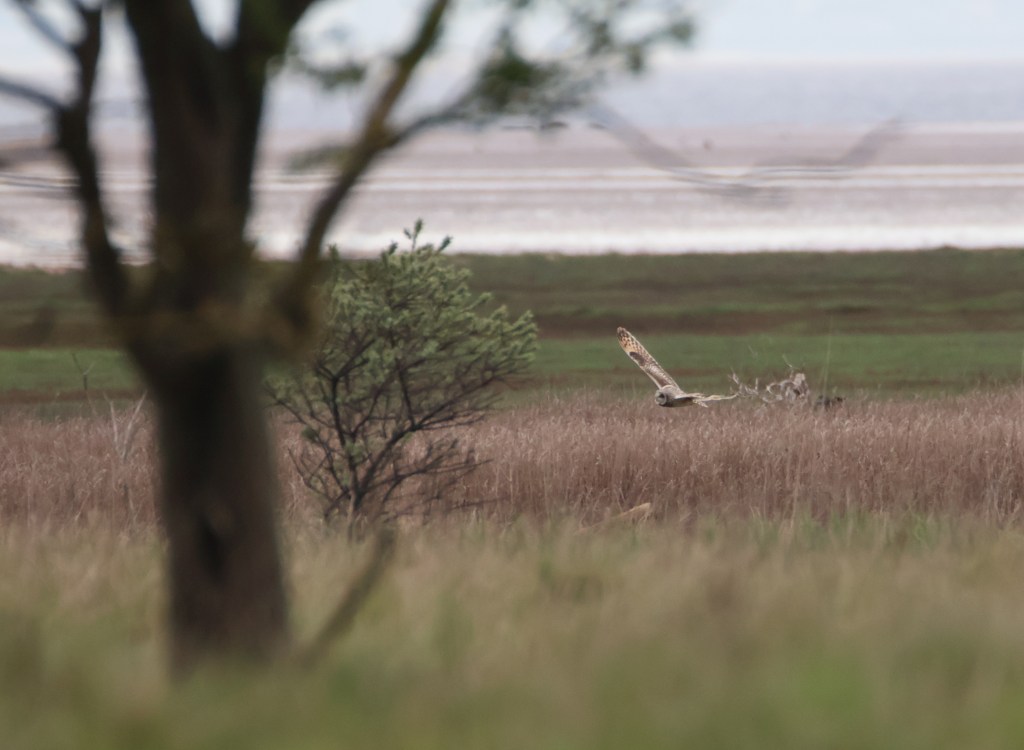
There were actually two flying around the bay the other night. I wondered if they might be a pair and with a nest in the ground somewhere. Short eared owls nest in amongst tall grasses, but long eared owls nest in hedges or woods, sometimes using abandoned crows’ nests.
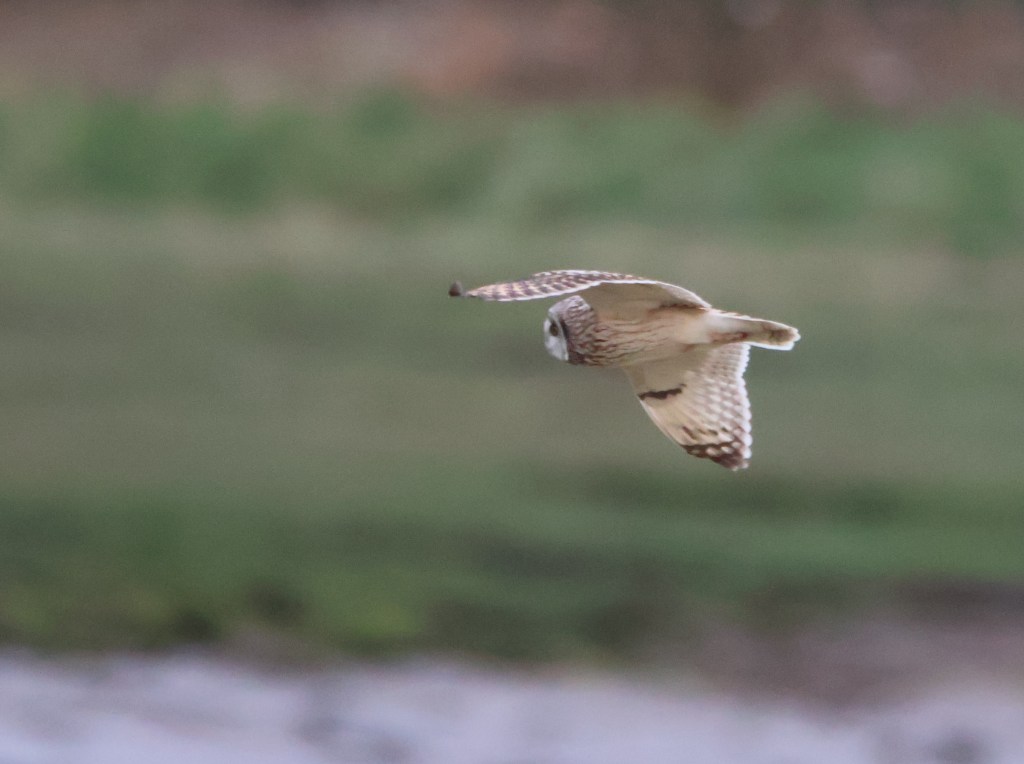
This year I’ve not seen a single tawny owls and alas no baby owlets have been spotted where there was a nest last year. But it’s encouraging to see long eared owls around and I wonder if they will nest where they did two years ago. I wonder if there will be a short eared owl family at Aberlady Bay or if eventually these owls will return to Scandinavia, if that’s where they’ve come from. So many unknowns, but a real treat to see them.

 Sarah's Wildlife Watch