
The whooper swans have flown in from Iceland to spend the winter here. Down in an English nature reserve they have seen thousands, however I was pleased to see seven at my local Hogganfield Loch. There are a couple of young ones in the group whose grey plumage is gradually changing to white.
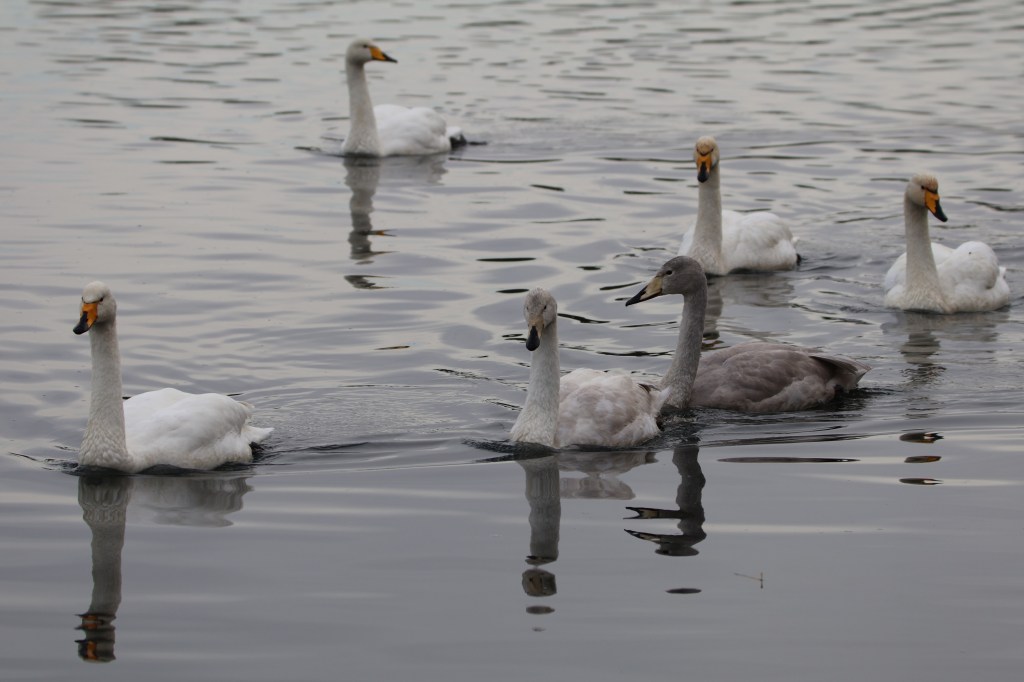
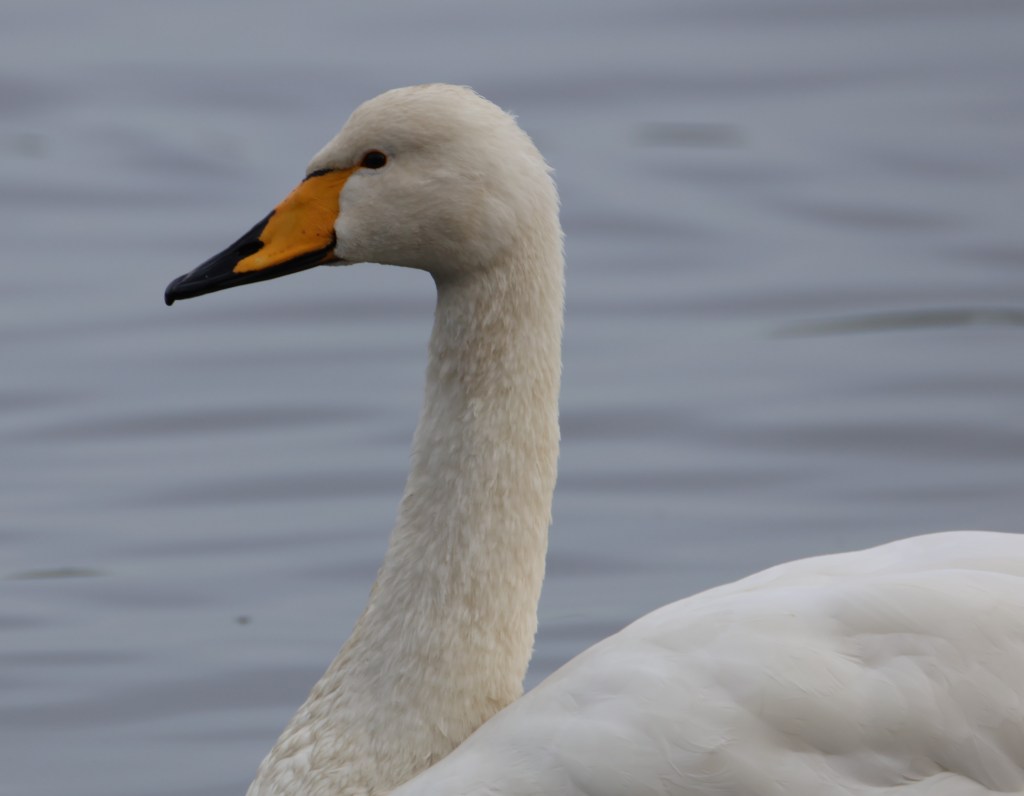
Whooper swans have yellow beaks which set them apart from the orange beaked mute swans. (Bewick swans also have yellow beaks but their yellow marks are more like knobs of butter than the cheese shaped yellow wedges of the whoopers.)
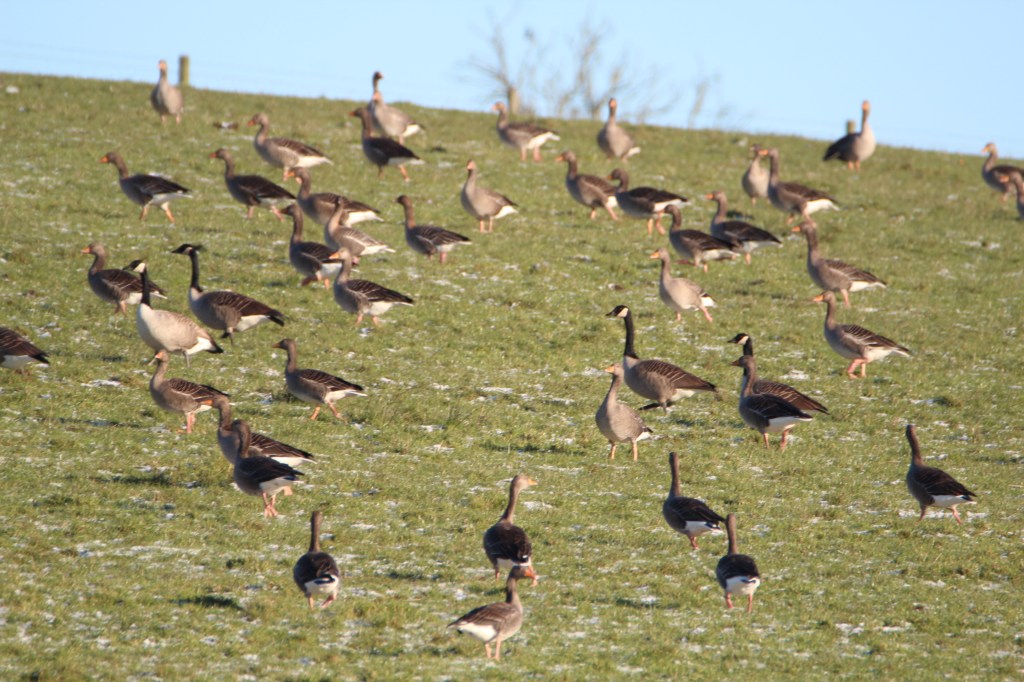
Other winter returners are geese. At this time of year you can see large flocks of geese grazing in fields. The two most common ones are pink footed geese and the black and white canada geese, often found together as in the next photo.
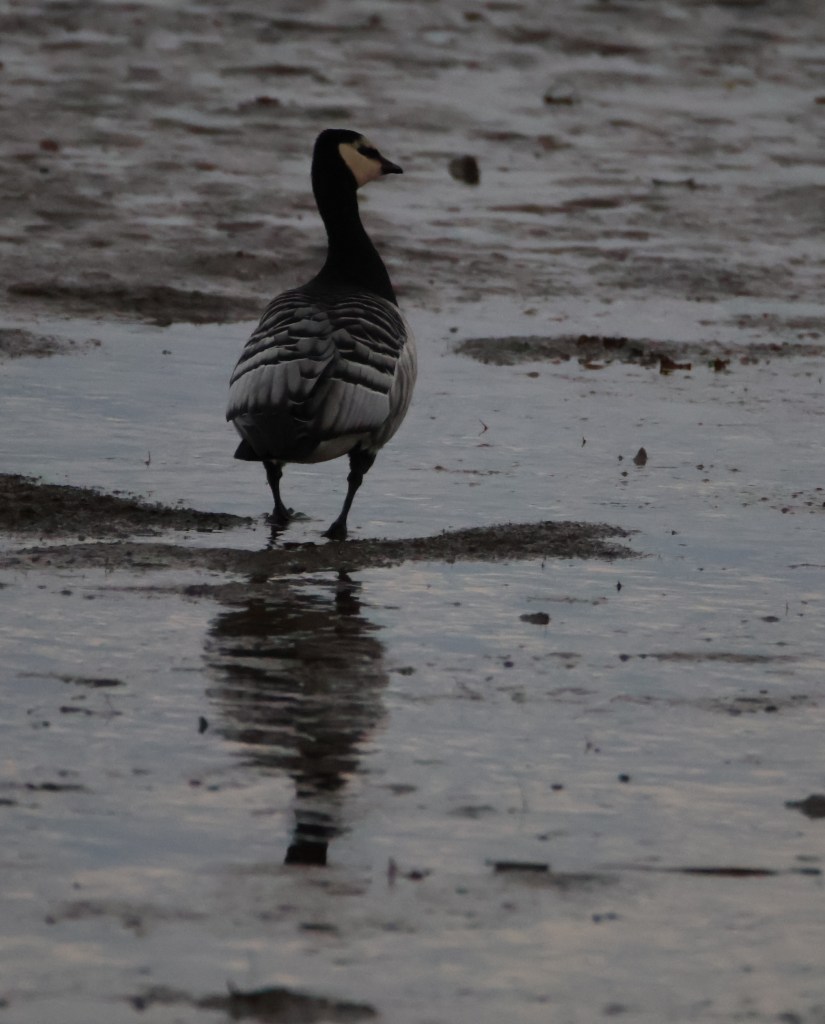
There were also some barnacle geese at Aberlady Bay. Here is one plodging over the marsh.
It’s not just the big birds which migrate in winter. Fieldfares from Scandinavia are a common sight and sound in the hedgerows. They make a distinctive chooking sound and are shy of passers by, flying off when ever approached.
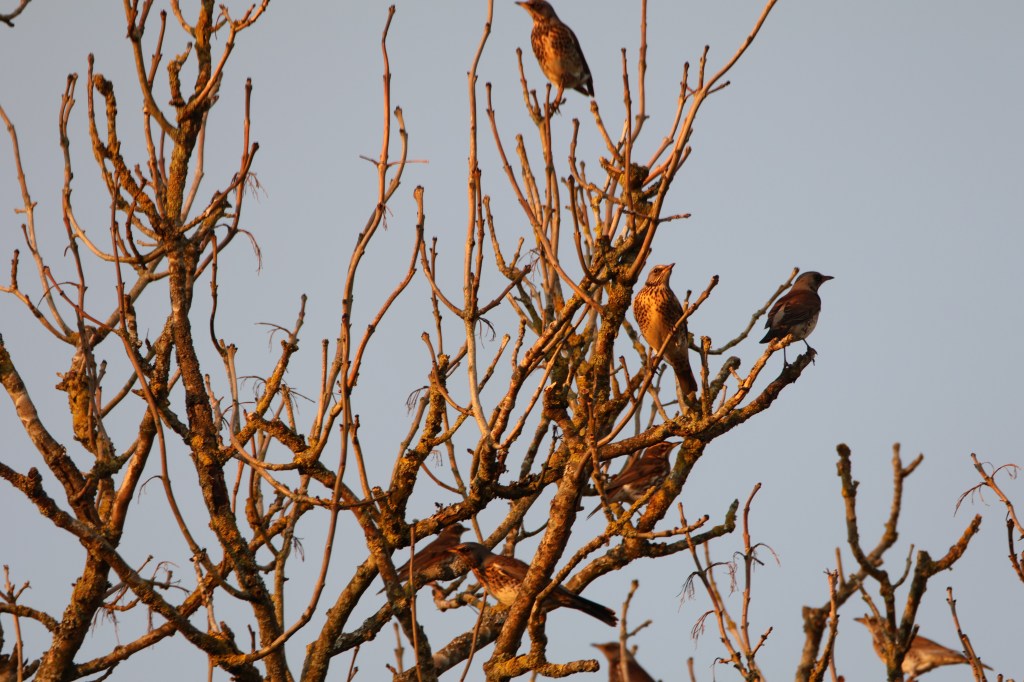
These are just a few of our return visitors. Some winters we also get flocks of exotic looking waxwings come to feast on berries. Last year was a great year for them, however not so this year so far. They must have a plentiful supply of food at present in Scandinavia.
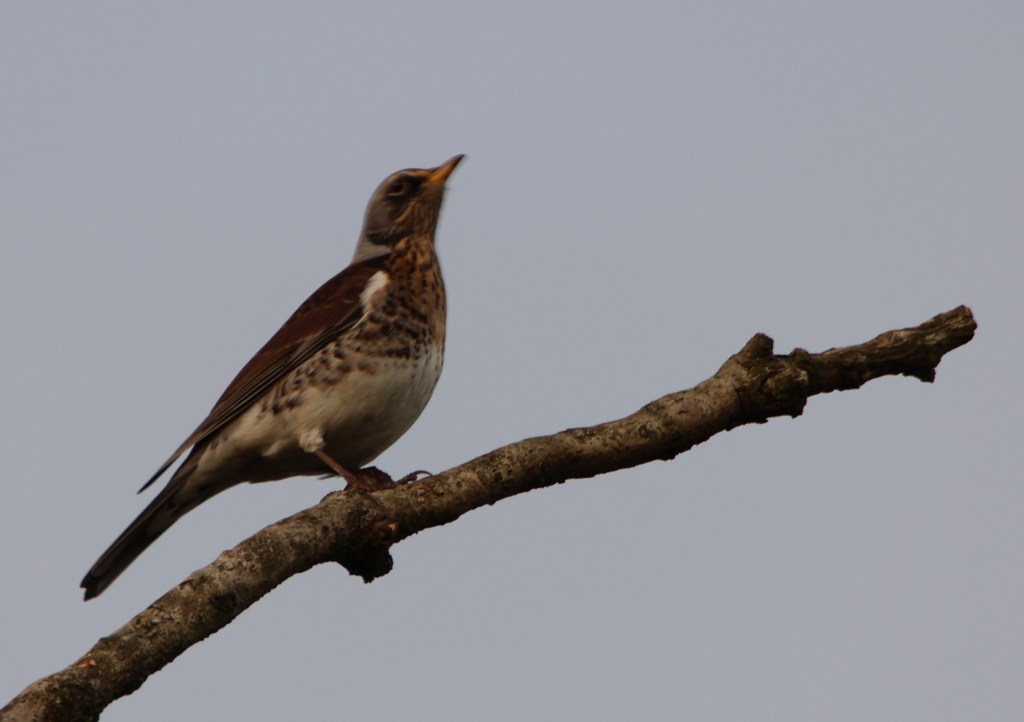
Meanwhile keep an eye out for the “regulars” on their return tickets, like this fieldfare.
 Sarah's Wildlife Watch