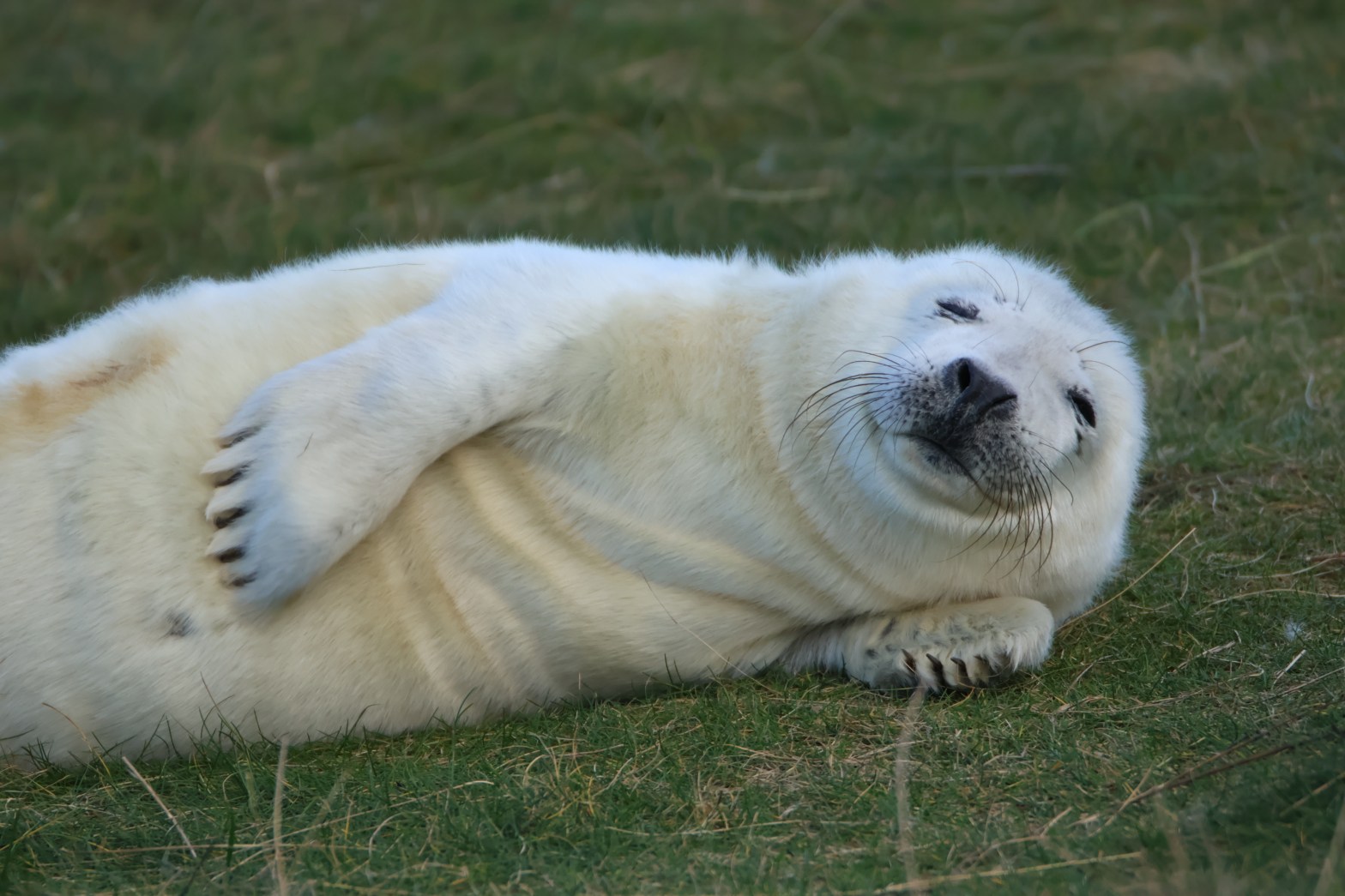
I’ve seen lots of images of white fluffy seals on cards and on television documentaries. When my son was wee he used to have a pillow sized cuddly seal toy called Snowy which accompanied us on holidays. But until today I’d never seen a seal pup in the wild, let alone photographed them.
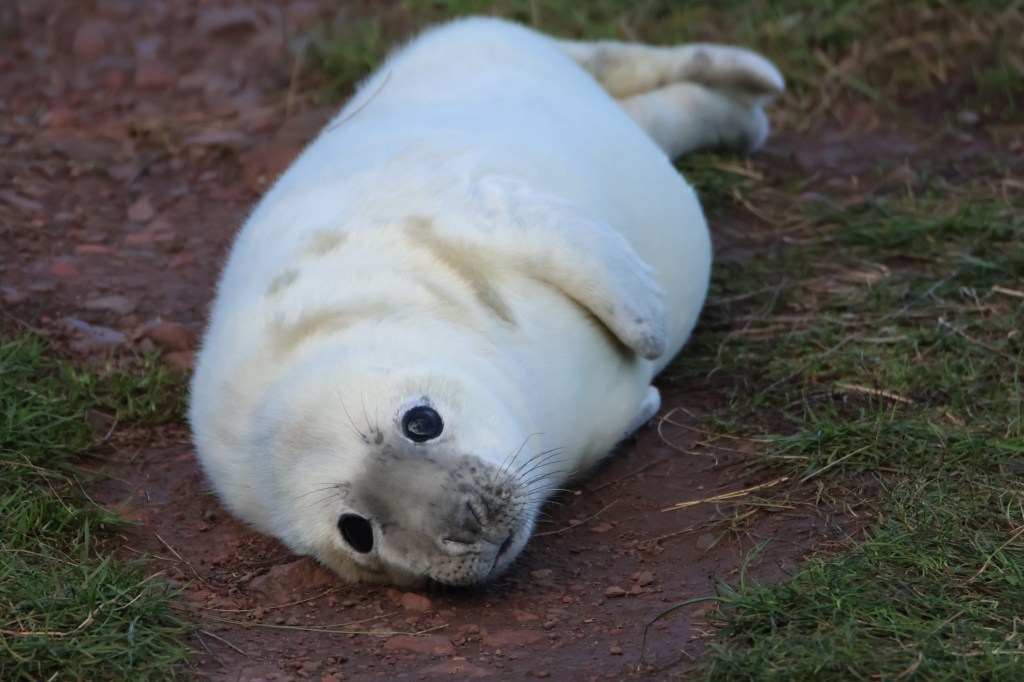
It might seem an unusual time of year for seal pups to be born but now is peak “pupping season” for grey seals. I knew that St Abbs Head Nature Reserve was a place that they could be seen so on our way back from visiting family in the north east of England we stopped in at the reserve.
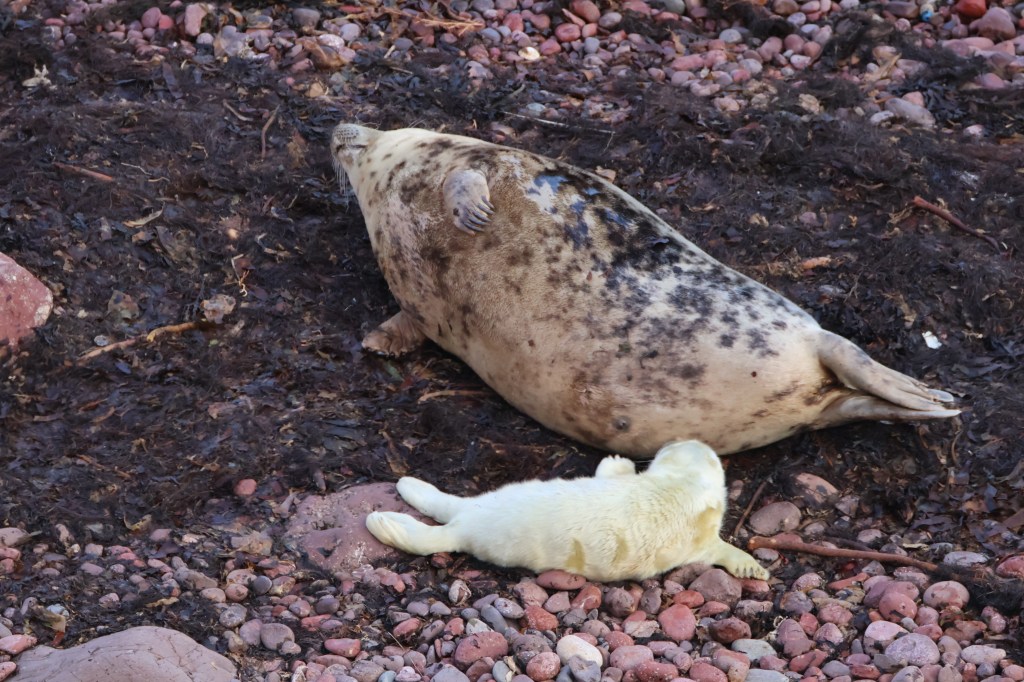
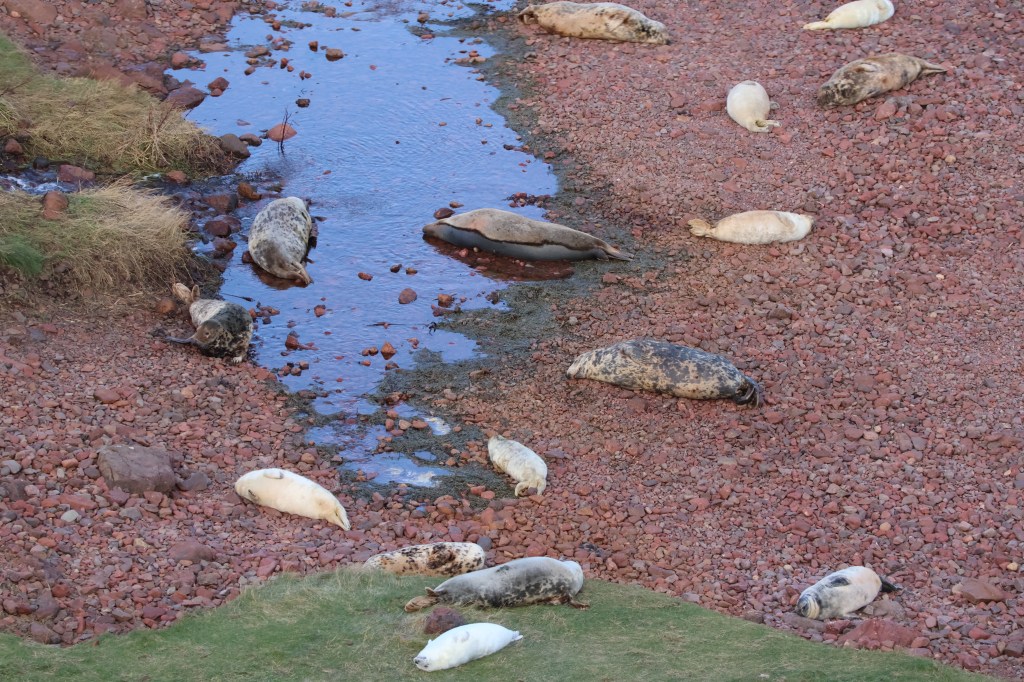
Looking down into Starney Bay from the coastal path we saw about ten seal pups with their mums and one large bull seal keeping watch on his patch of beach. One of the seal pups still had a bit of bloody umbilical cord showing.
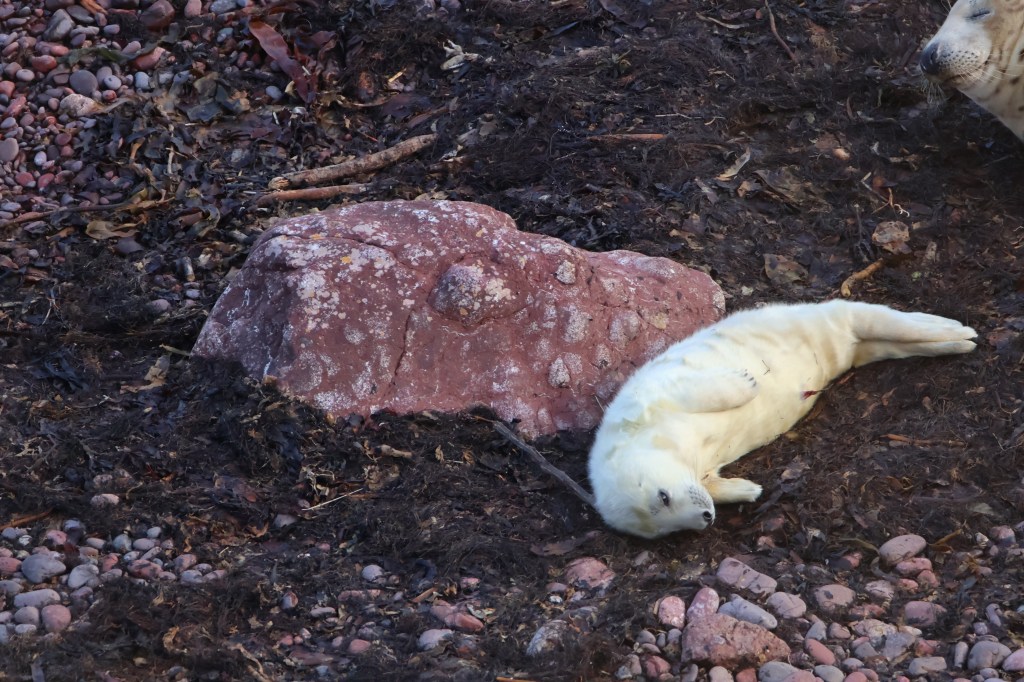
I took quite a few photos from the cliff top above and then we went back to the visitor centre, satisfied with what we’d seen.
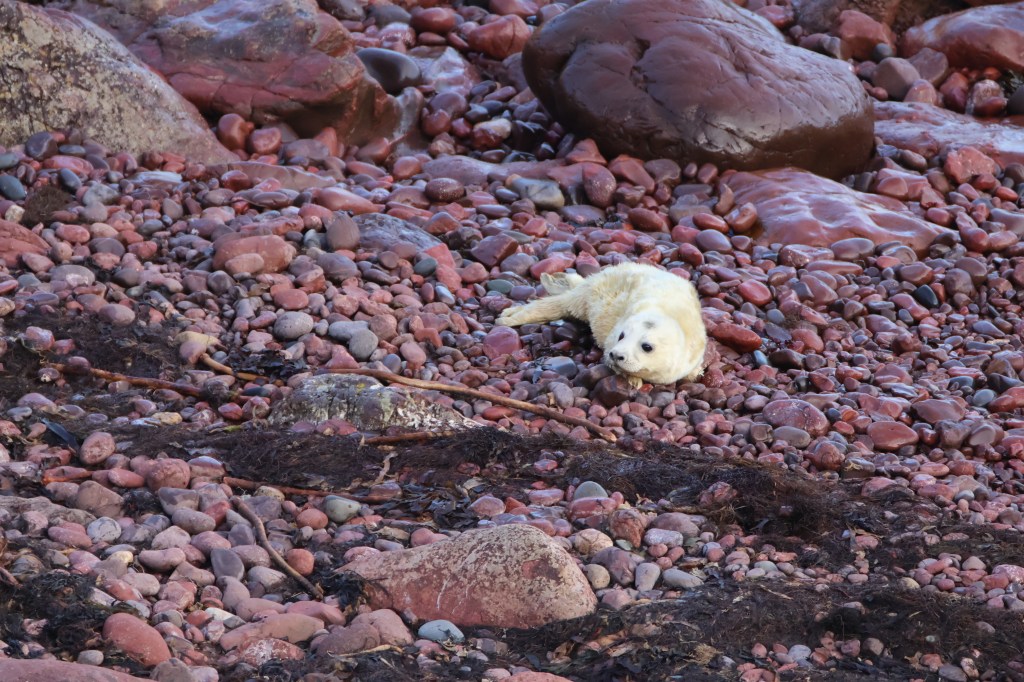
I spoke to one of the rangers who asked me if I had any questions. Well, of course I did! First, did seals have only one pup at a time? Yes. And then I found out a whole lot of other information. The grey seals have pups at this time of year because the mothers have spent the summer fishing and building up enough body fat and nutrients to be able to survive without feeding for two to three weeks whilst the pups suckle from them. The mother seals, called cows, can lose up to half of their body weight in this time whilst their pups gain from the fatty nutrient rich milk. Then as soon as the pups are weaned the cows mate again. However the embryos are in effect frozen until the following year so that pregnancies are timed to last eight to nine months so that pups are born late autumn, early winter.
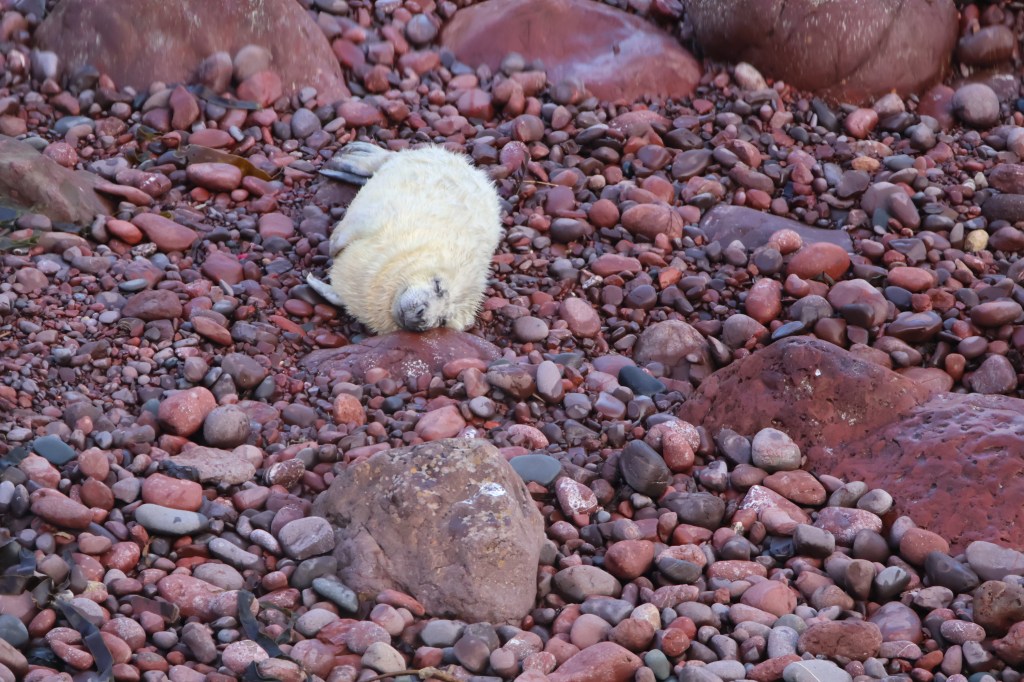
It can be a perilous time for the pups. Only 50% survive the winter. If they get separated from their mums, attacked by bull seals, or swept out to sea they can die. Their white fur may look warm and fluffy but it is not waterproof and if they get too wet and cold they can perish. It is only when they moult their white coats that they get the grey waterproof coat underneath. They don’t look so cute then, and live up to their nickname, sea slugs.
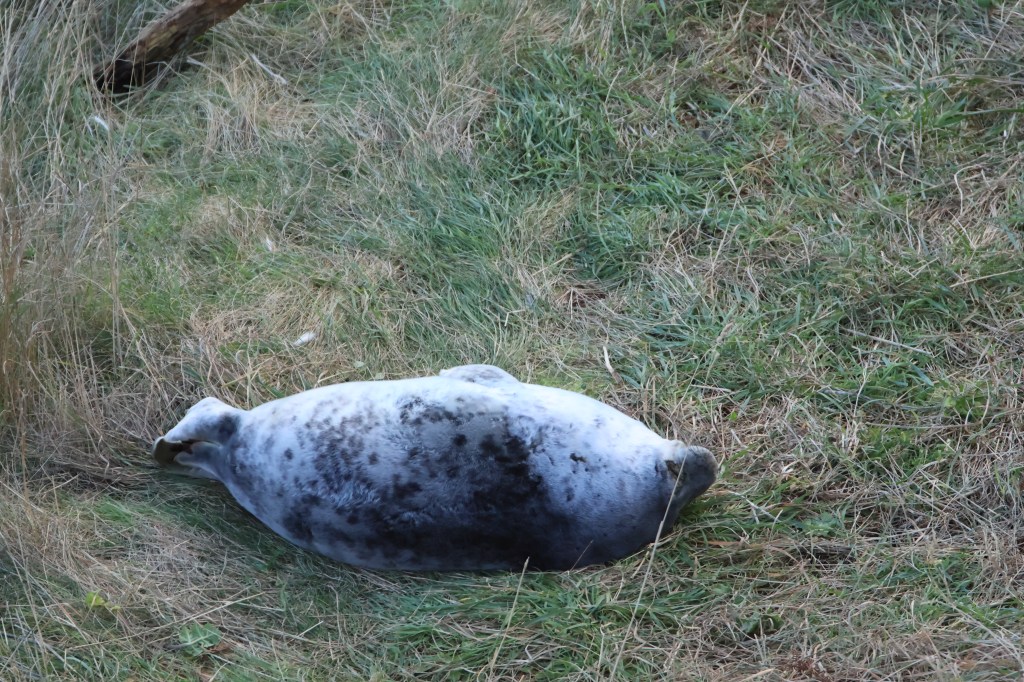
“Have you enjoyed your visit?” asked the ranger.
“Oh yes,” I replied “but we didn’t have time to walk further around the reserve.”
“Thats a real shame, because if you follow the path over the next rise you come to Horsecastle Bay and there we’ve had to put a fence up as the seals are coming ashore right next to the path,” he said.
Back we went! We retraced our steps and went further on and what a treat was in store! Here we found a bay level with the path and 35 seal pups close by.
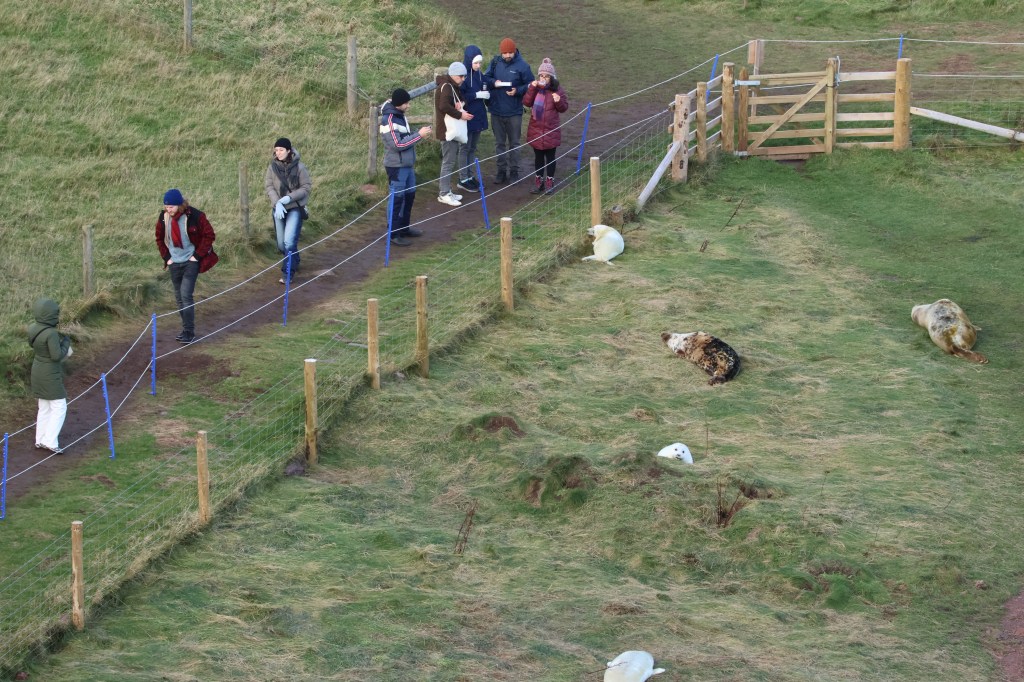
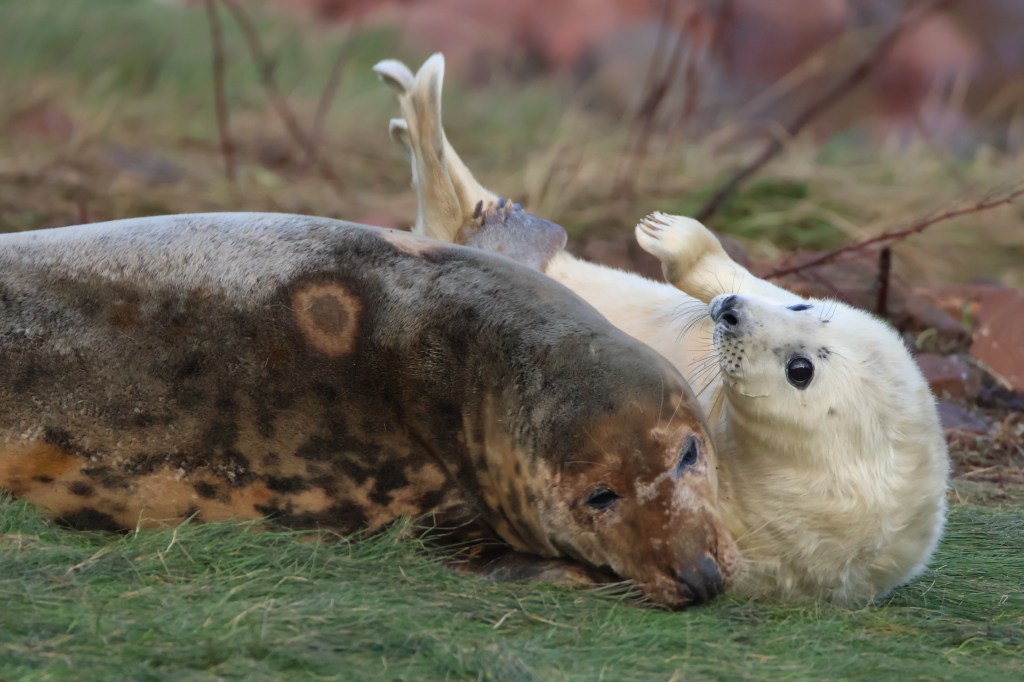
It was incredible to see the pups and their mums up close.
This pair in particular caught my eye. They were cuddling up and it was fascinating watching them interact with each other.
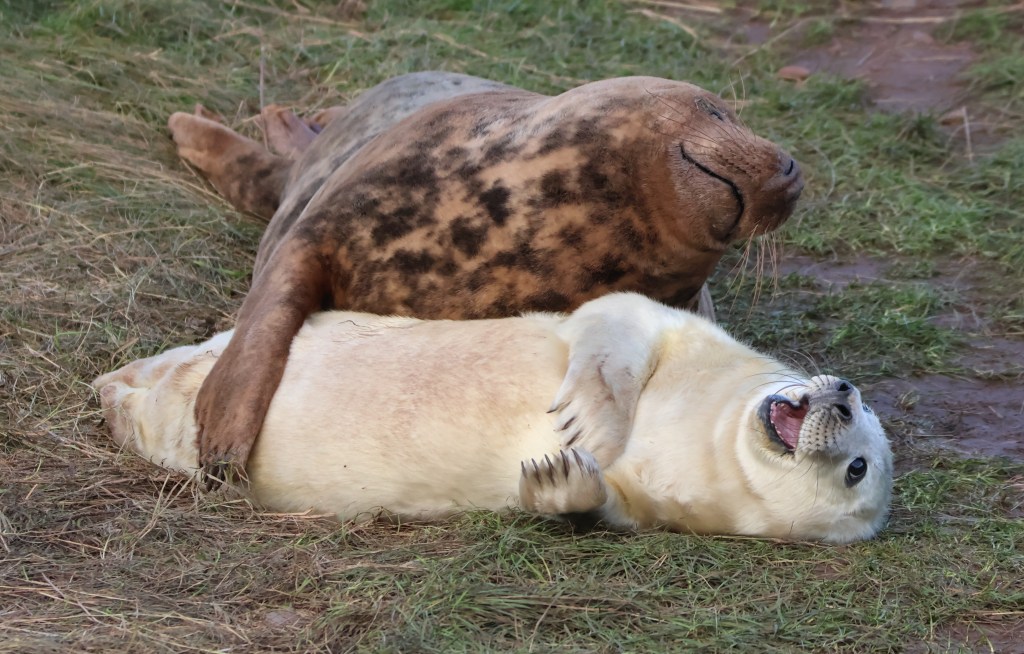
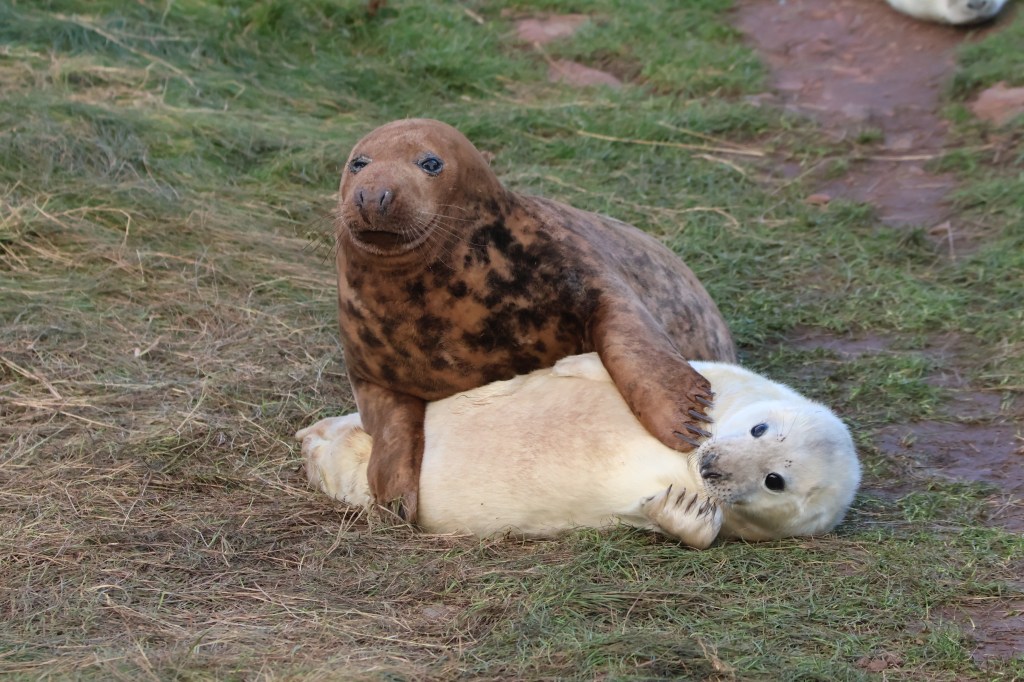
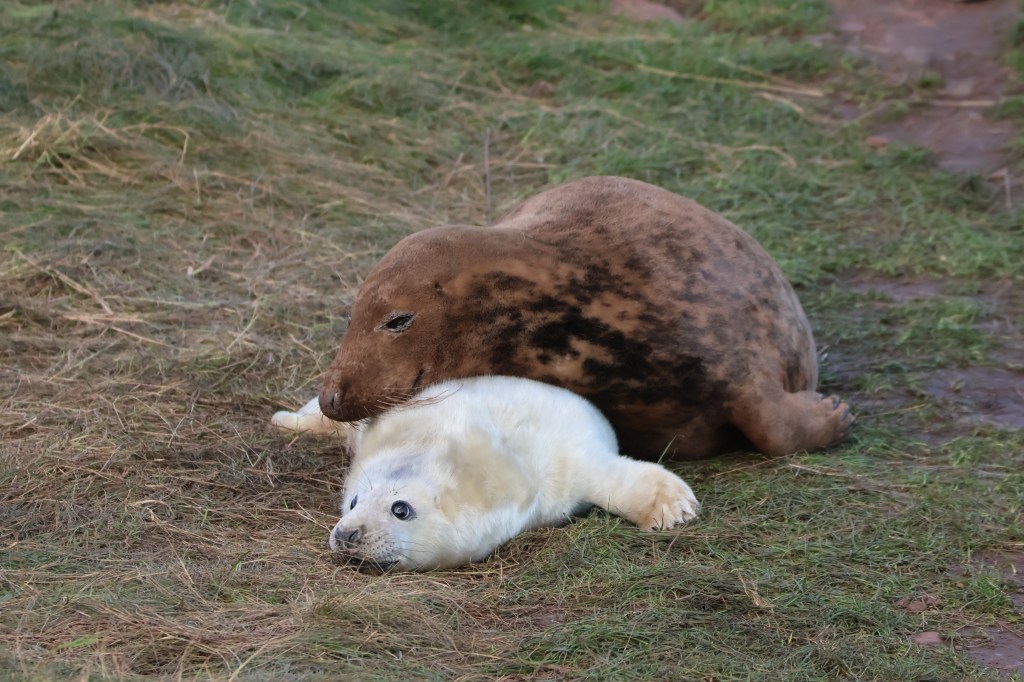
I had difficulty leaving this amazing place. So many seal pup photo opportunities. This last image reminds me of the phrase going flat out!
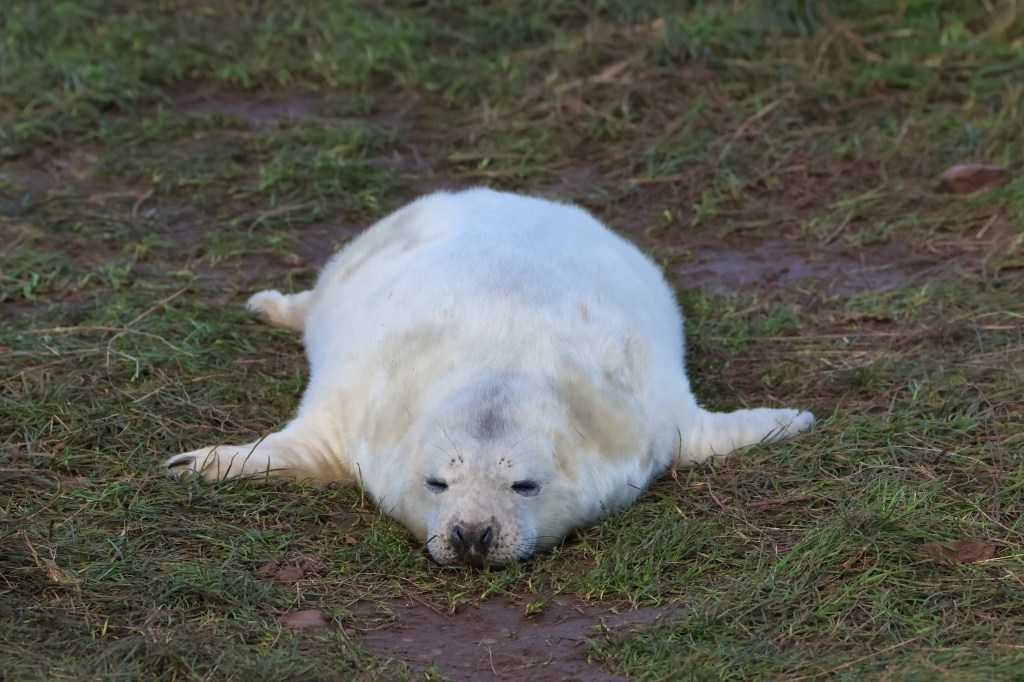
I hope these little ones survive. Once they have been weaned they are left to survive by themselves. They have to work out on their own how to catch fish and feed themselves. It is a tough world out there for them, and at a time of year when winter storms are unforgiving.
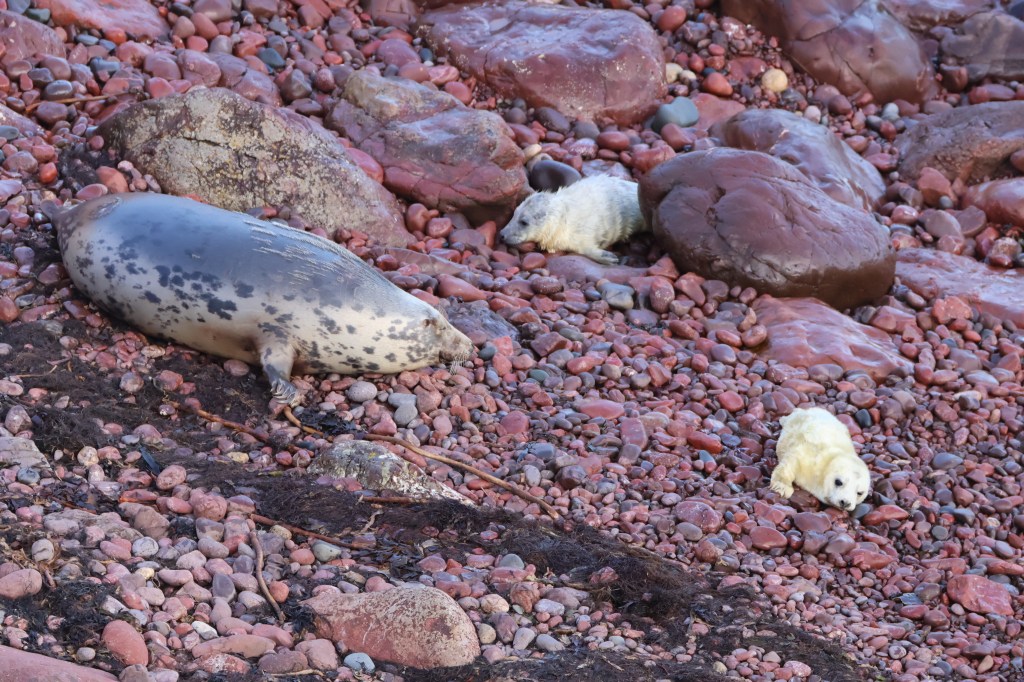
This has to have been one of my most memorable wildlife watching experiences.
 Sarah's Wildlife Watch
Thanks Sarah, that is incredibly heart warming 🙂 Keep up the good work – it’s wonderful and thank you again for sharing .
LikeLike